
Last updated on July 16th, 2026 at 09:39 am
Learn how to make easy homemade pasta that is delicious and perfectly textured without all the fuss. Is there anything more satisfying than a bowl of homemade pasta? It’s so simple to make, and yet it feels like a real treat.
Make your own pasta using different types of flour such as all purpose flour and semolina flour. This basic pasta dough recipe can be made ahead and stored in the refrigerator a few days until you are ready to use. Since fresh pasta cooks up quickly, it makes a perfect homemade weeknight meal for the whole family.
Homemade pasta might seem intimidating, but it’s surprisingly simple to make with just five pantry staples. Whether you’re using a pasta machine or rolling it out by hand, fresh pasta cooks in just a few minutes and has a tender texture that’s hard to beat. Once you make your own noodles, you’ll understand why generations of home cooks have kept this tradition alive.
Making Pasta at an Italian Restaurant
When I was younger, I worked at an Italian restaurant, and they made fresh pasta every day. It was great to use in the kitchen as it only took 3-4 minutes to cook in the boiling water. Fresh pasta cooks much faster than dried pasta.
We would make the pasta and divide it out into individual servings on half sheet pans lined with parchment paper. This helps the dough not stick. We would cover the entire baking sheet with plastic wrap and refrigerate until it was time to make the pasta.
We also had a steam table in the kitchen filled with 7 different pasta sauces, from pesto to marinara, to a garlic parmesan sauce.
Pair these delicious smelling sauces with garlic bread and you can just image how good I smelled coming home every evening after work.
At the restaurant, since we made so much pasta, we used a pasta machine to make the dough thin and cut the size of the pasta from thin spaghetti to linguini. The same dough was used for all our dishes, it was just cut into different thicknesses.
Why You’ll Love This Homemade Pasta
- Only 5 simple ingredients
- No special flour required
- Ready in about an hour
- Works with or without a pasta machine
- Freezer friendly
- Perfect for spaghetti, fettuccine, ravioli, lasagna, and more
- Great weekend family cooking project

How to Make Easy Homemade Pasta Recipe
As an Amazon Associate I earn from qualifying purchases.
Kitchen Essentials


Ingredients
- 2 Cups All-Purpose Flour
- ½ Teaspoon Salt
- 2 Large Eggs
- 3 Tablespoons Water
- 3 Tablespoons Olive Oil
Instructions
Homemade Pasta Recipe
- In a large bowl, whisk together the flour and salt.2 Cups All-Purpose Flour, ½ Teaspoon Salt
- In a small bowl, beat the eggs, water, and olive oil with a fork until combined.2 Large Eggs, 3 Tablespoons Water, 3 Tablespoons Olive Oil
- Pour the wet ingredients into the flour mixture. Stir with a fork until a shaggy dough begins to form.
- Transfer the dough to a lightly floured work surface. Knead for 2 to 3 minutes, until smooth and satiny. If the dough is sticky, sprinkle with a little more flour. If it’s too dry, add water 1 teaspoon at a time.
- Wrap the dough tightly in plastic wrap and let it rest at room temperature for 30 minutes.
- Divide the dough into 4 equal portions. Keep the portions you’re not using covered to prevent them from drying out.
Pasta Machine
- Flatten one portion into a small rectangle. Run it through the pasta machine on the widest setting once or twice.
- Fold the dough into thirds and pass it through the widest setting again. Reduce the roller setting one notch at a time, passing the dough through each setting until it reaches your desired thickness. Support the dough as it becomes longer and thinner.
- Run the pasta sheet through the cutter attachment to create your preferred noodle shape.
Rolling Pin
- On a lightly floured surface, roll each portion of dough as thin as possible. Cut into strips using a knife, pizza cutter, or pasta wheel.
Cook
- Bring a large pot of generously salted water to a rolling boil. Add the fresh pasta and cook for 3 to 4 minutes, or until al dente. Drain and serve immediately with your favorite sauce.
Your Own Private Notes
Notes
Recipe Notes
- Measure the flour correctly. Spoon the flour into the measuring cup and level it off instead of scooping directly from the bag. Too much flour can make the dough dry.
- Don’t skip the resting time. Letting the dough rest for at least 30 minutes relaxes the gluten, making it much easier to roll thin.
- Adjust as needed. Humidity, altitude, and egg size can affect the dough. If it’s sticky, add a little flour. If it’s dry or crumbly, add water 1 teaspoon at a time.
- Salt the cooking water generously. Fresh pasta cooks quickly and gets much of its flavor from the salted water.
- Fresh pasta cooks fast. Begin checking for doneness after 3 minutes to avoid overcooking.
- Keep unused dough covered. Pasta dough dries out quickly, so wrap any portions you’re not currently rolling.
- No pasta machine? A rolling pin and sharp knife work just as well. Just roll the dough as thin as possible before cutting.
Nutrition
Ingredient Notes
All-Purpose Flour
Creates a tender pasta that’s easy for beginners. You can substitute part of it with semolina flour for a firmer bite.
Eggs
Large eggs provide richness, color, and structure.
Olive Oil
Adds elasticity and makes the dough easier to work with.
Water
Helps bring the dough together. Depending on humidity, you may need slightly more or less.

How to Roll Pasta Dough with a Pasta Machine
Working with one portion of dough at a time, keep the remaining dough covered with plastic wrap so it doesn’t dry out.
Flatten the dough slightly with your hands into a small oval or rectangle. Set your pasta machine to the widest setting (the number varies by brand) and feed the dough through the rollers once or twice.
Fold the dough into thirds, like a letter, and run it through the widest setting again. This helps create a smooth, even texture.
Next, reduce the roller setting one notch and pass the dough through again. Continue lowering the setting one step at a time until you’ve reached your desired thickness. As the dough becomes longer and thinner, use one hand to gently support it as it comes through the rollers to prevent tearing.
Once the sheet is the thickness you want, run it through the cutter attachment to make fettuccine, spaghetti, or your favorite noodle shape.
Pro Tip: If the dough starts sticking to the rollers or your work surface, lightly dust it with flour. Use just enough to prevent sticking without drying out the dough.

Rolling Pasta Dough with Rolling Pin Instructions
No pasta machine? No worries, you can use a rolling pin and a knife to get the job done.
Roll each portion of the dough individually on a well-floured surface. Get the dough as thin as possible. Then cut thin strips of the dough. It is okay if they are not exactly straight and narrow. They may look rustic; however, they will still taste amazing.
If you don’t have a pasta machine, you can use a rolling pin and knife (or pizza cutter) instead. Keep in mind you’ll want to roll it out as thin as humanly possible, as it will plump up considerably once you cook it.
You could use a pasta cutter if you desire more consistency in your pasta.
Once rolled and cut, this pasta can be used in a recipe right away. Just add to boiling salted water and cook for 3-4 minutes until al dente.
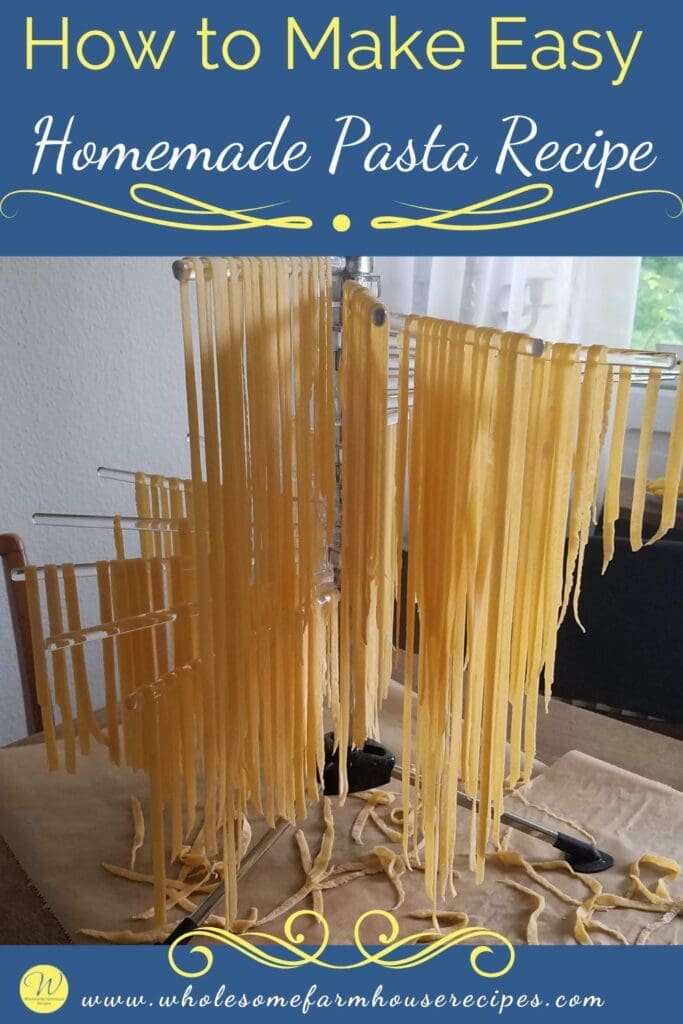
If you prefer to dry the pasta for later, just drape the pasta over a drying rack as they will dry evenly through the pasta and dry faster too.
Pasta Making Tips
Make sure you let the dough rest before rolling out. This helps the flour and liquids fully absorb, which also helps the gluten to relax. The relaxed gluten is what helps the dough stretch out thinly without splitting when rolled out.
Get your dough thin before slicing into the long strips.
When the dough starts sticking to anything, sprinkle on flour.
Flavor the pasta with herbs. They can be fresh or dried. 1 or 2 tablespoons seems to be enough. We have used oregano, thyme, and basil. They pair well with the sauces.
Add spice such as onion powder, garlic powder, or smoked paprika. Generally, 1 teaspoon is enough for us when I add it as the sauce that the pasta is served with also has flavorings and it can be overpowering.
Troubleshooting Homemade Pasta
My dough is too sticky.
Dust with flour a tablespoon at a time.
My dough is crumbly.
Add water one teaspoon at a time.
The dough keeps shrinking.
It needs more resting time.
The noodles stick together.
Dust lightly with flour before cutting or drying.

Homemade Pasta Substitutions and Flavor Variations
Semolina Flour: Replace up to 1 cup of the all-purpose flour with semolina flour for a firmer pasta with a traditional Italian texture.
Whole Wheat Pasta: Substitute up to half of the all-purpose flour with whole wheat flour. You may need an extra tablespoon or two of water since whole wheat flour absorbs more moisture.
Italian Herb Pasta: Mix 1 tablespoon of dried Italian seasoning into the flour before adding the wet ingredients.
Garlic Pasta: Add 1 teaspoon garlic powder to the flour mixture for a subtle garlic flavor that pairs well with butter or cream sauces.
Black Pepper Pasta: Stir in 1 teaspoon freshly ground black pepper for homemade cacio e pepe-inspired noodles.
Spinach Pasta: Replace the 3 tablespoons of water with ¼ cup well-drained, finely pureed cooked spinach. Add a little extra flour if needed until the dough is smooth.
Thicker Noodles: Roll the dough a little thicker for hearty soups or rustic pasta dishes.
Thin Pasta: Roll the dough to the thinnest setting for delicate fettuccine, angel hair, or ravioli.
How to Cook Homemade Pasta?
Homemade pasta cooks a lot faster than store-bought pasta. Get your salted water boiling and add your pasta. It will be done in 2-4 minutes.
| Fresh Homemade Pasta | Dried Store-Bought Pasta |
| Cooks in 3–4 minutes | Cooks in 8–12 minutes |
| Soft, tender texture | Firmer texture |
| Rich egg flavor | Neutral flavor |
| Freezes well | Pantry stable |
| Great for special meals | Convenient everyday option |
How do I store homemade pasta?
Refrigerating the Dough
Wrap the pasta dough tightly in plastic wrap or place it in an airtight container. Store it in the refrigerator for up to 24 hours before rolling it out. When you’re ready to use it, let the dough sit at room temperature for about 20 to 30 minutes so it’s easier to work with.
Storing Fresh Pasta
Freshly cut pasta can be refrigerated for 2 to 3 days. Lightly dust the noodles with flour to keep them from sticking together, then store them in an airtight container.
Freezing Homemade Pasta
Homemade pasta freezes beautifully. Lightly toss the noodles with a little flour, then arrange them in a single layer on a baking sheet or form them into small nests. Freeze until firm, then transfer to a freezer-safe bag or airtight container. Frozen homemade pasta keeps well for up to 6 months.
There’s no need to thaw before cooking. Simply add the frozen pasta directly to boiling, salted water and cook for an extra minute or two.
Drying Homemade Pasta
If you’d like to store pasta in your pantry, hang the noodles on a pasta drying rack or lay them in a single layer until completely dry. Drying time will vary depending on the humidity in your home but usually takes 12 to 24 hours.
Once the pasta is completely dry and brittle, store it in an airtight container in a cool, dry place for up to one month. For the best flavor and texture, enjoy homemade dried pasta within a few weeks.
How Long Does Fresh Pasta Last?
Fresh uncooked pasta will last in the refrigerator up to 3 days. Fresh, store-bought pasta can be stored in the fridge for up to 2 days.
What to Serve with Fresh Homemade Pasta
Fresh homemade pasta is incredibly versatile and pairs beautifully with everything from simple butter sauces to hearty family dinners. Because it cooks in just a few minutes, it’s the perfect base for quick weeknight meals or special occasions.
Try serving it with one of these delicious favorites:
- Classic Marinara Sauce – A simple homemade tomato sauce lets the fresh pasta shine.
- Creamy Alfredo Sauce – Rich, creamy, and always a family favorite with fettuccine.
- Brown Butter and Parmesan – Toss the hot pasta with browned butter, freshly grated Parmesan, and cracked black pepper for an elegant yet effortless meal.
- Fresh Basil Pesto – Bright, herbaceous pesto is perfect during the summer when basil is plentiful.
- Garlic Butter Shrimp – Tender shrimp sautéed in garlic butter makes an easy restaurant-quality dinner.
- Slow-Cooked Beef Roast – Serve homemade noodles under shredded roast beef with rich gravy for classic comfort food.
- Chicken Parmesan – Crispy breaded chicken and marinara over fresh pasta is always a crowd-pleaser.
- Meatballs and Homemade Sauce – A timeless pairing that’s perfect for Sunday dinner.
Complete the meal with a crisp Caesar salad, roasted asparagus, buttery garlic bread, or roasted Brussels sprouts for a comforting homemade dinner everyone will enjoy.
Making homemade pasta is one of those kitchen skills that’s much easier than most people expect. Once you’ve mixed, rolled, and cooked your first batch, you’ll see how rewarding it is to serve fresh noodles made from scratch. Whether you’re preparing a cozy family dinner or stocking your freezer with homemade meals, this simple recipe is one you’ll come back to again and again.
Stay connected with Wholesome Farmhouse Recipes
Add Wholesome Farmhouse Recipes as a preferred source in Google Search to make it easier to find our recipes and cooking ideas when you're searching for something delicious to make.


My family loved this!