
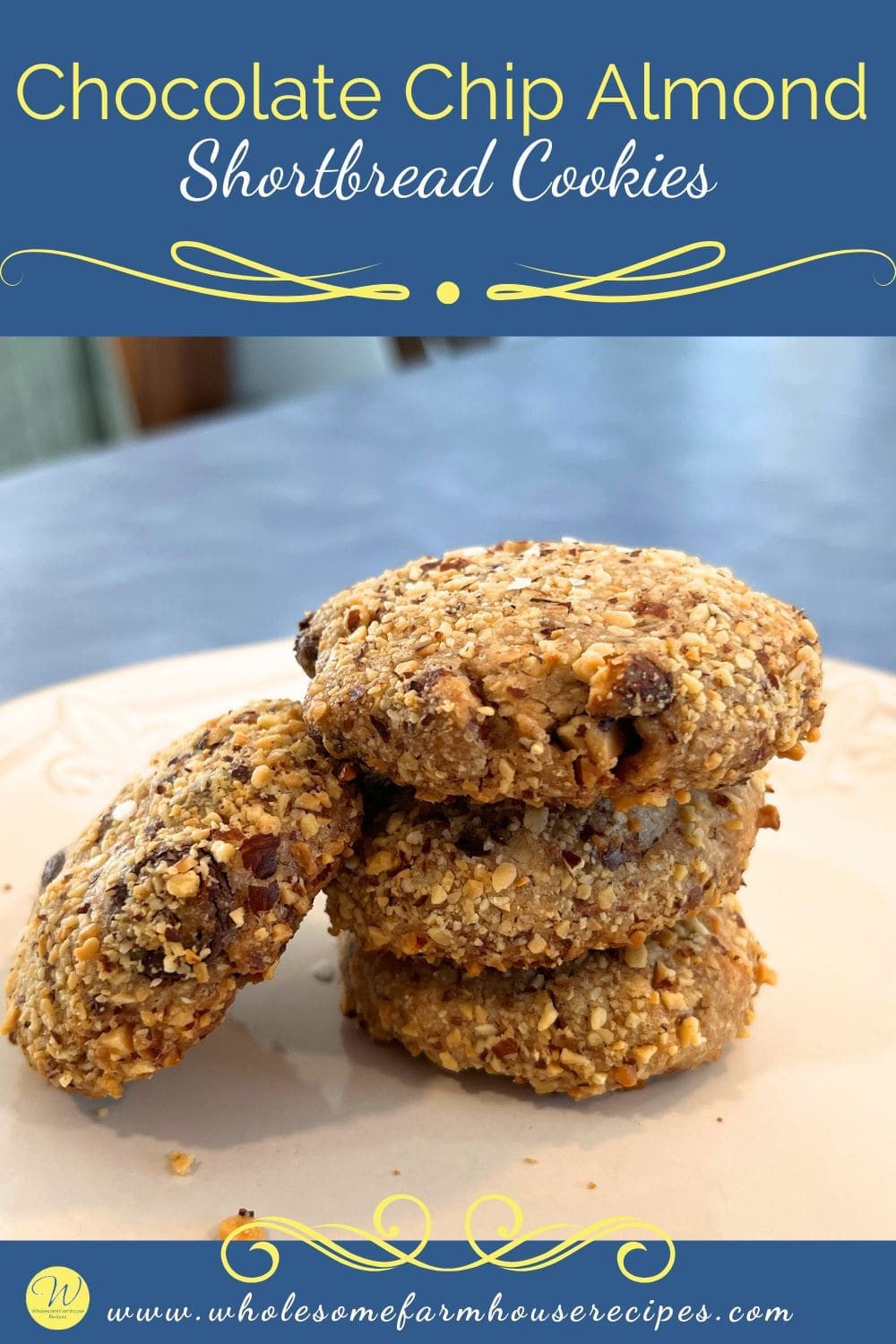
These Chocolate Chip Almond Shortbread Cookies have that old-fashioned, from-scratch feel—firm, buttery, and full of texture. Each bite has a gentle crunch from the almonds, balanced by pockets of melted chocolate. They’re the kind of cookie that holds its shape, travels well, and pairs perfectly with a hot cup of coffee on a quiet morning.
- Not like: soft bakery chocolate chip cookies
- More like: shortbread, biscotti (but less dry), or a firm butter cookie
You know that moment when you bite into a cookie and it actually tastes like the thing it claims to be?
Most almond cookies are just regular cookies with extract. They taste like vanilla with a whisper of something vaguely nutty. Meanwhile, the almonds listed on the ingredient list are doing absolutely nothing for flavor or texture.
This recipe fixes that by using roasted almonds in three distinct ways. Coarsely chopped pieces go into the dough for texture. Finely chopped almonds coat the outside for a crunchy crust. And the roasting brings out oils that make every bite taste deeply, actually like almonds.
Why This Recipe Works
The magic here is not just about throwing almonds into dough and hoping for the best.
Roasted almonds release their natural oils when you chop them, which means more flavor gets distributed throughout the dough instead of sitting there like flavorless pebbles.
Using them coarsely chopped inside the cookie gives you bursts of texture, while the finely chopped coating creates a crispy exterior that contrasts with the chewy center. Most recipes only use almonds one way. This one uses them strategically in two forms to hit different sensory notes.
Cold butter is the key to chewiness. When you cream cold butter with sugar, it stays structured instead of melting into a greasy mess. That structure traps air, which creates a tender crumb that holds moisture longer. If your butter is too soft, the cookies spread too fast and turn flat and crispy all the way through. Cold butter means thicker cookies with soft centers.
Vanilla bean paste instead of extract is a small move with big impact. The seeds add visual flecks and a more complex vanilla flavor that does not taste artificial or one-note. It also has a thicker consistency that integrates better into dough.
Flattening the dough balls to half an inch before baking gives you control over the final texture. If you bake them as round balls, the centers stay too thick and underbake while the edges burn. Pressing them down slightly creates even thickness, so everything bakes at the same rate. You get crispy edges and chewy middles without guessing.
The combination of coarse and fine almonds, cold butter structure, and controlled thickness is what makes these cookies stay soft for five days instead of turning into hockey pucks by day two.

Chocolate Chip Almond Shortbread Cookies
As an Amazon Associate I earn from qualifying purchases.
Kitchen Essentials

Ingredients
- 1 ½ Cups Almonds Roasted
- 1 Large Egg
- 1 Tablespoon Vanilla Bean Paste
- 1 Cup Butter 2 sticks cold and cubed
- ½ Cup Granulated Sugar
- 1 Teaspoon Salt
- 2 Cups All-Purpose flour
- 1 Cup Chocolate Chips or chocolate chunks
- Flaky Sea Salt for topping
Instructions
Here is how you build these cookies from start to finish without guessing.
- Preheat your oven to 350°F and line two baking sheets with parchment paper. Do this first. If you wait until the dough is ready, the oven will not be hot enough and your cookies will spread too much before they set.
- Chop 1 cup of roasted almonds coarsely and ½ cup finely. Keep them separate. The coarse ones go into the dough for texture. The fine ones coat the outside for crunch. If you chop them all the same size, you lose the textural contrast that makes these cookies interesting.1 ½ Cups Almonds
- Whisk together the egg and vanilla bean paste in a small bowl. Set it aside. Whisking them together first means the vanilla distributes evenly instead of clumping in one spot when you add it to the butter.1 Large Egg, 1 Tablespoon Vanilla Bean Paste
- Add cold, cubed butter to your stand mixer and beat it until slightly softened but still cool. This should take about 1 minute on medium speed. If the butter warms up too much, stop and chill it for 10 minutes. Warm butter kills the structure.1 Cup Butter
- Add granulated sugar and salt. Beat on medium speed for 2 minutes until light and fluffy. The mixture should look pale and hold soft peaks. This is where you are building the structure that keeps the cookies chewy.½ Cup Granulated Sugar, 1 Teaspoon Salt
- Pour in the egg and vanilla mixture. Mix on low until fully combined. Scrape down the sides of the bowl. If you skip this, you will have pockets of unmixed egg in your dough.
- Add all-purpose flour in three additions. Mix just until incorporated after each addition. Overmixing once the flour goes in creates gluten, which makes cookies tough and dense instead of tender.2 Cups All-Purpose flour
- Fold in the coarsely chopped almonds and 1 cup chocolate chips. Mix on low speed just until evenly distributed. Do not overwork the dough at this stage.1 Cup Chocolate Chips
- Scoop heaping tablespoons of dough and roll them into 2-inch balls. Use a cookie scoop if you have one. Uniform size means they bake at the same rate.
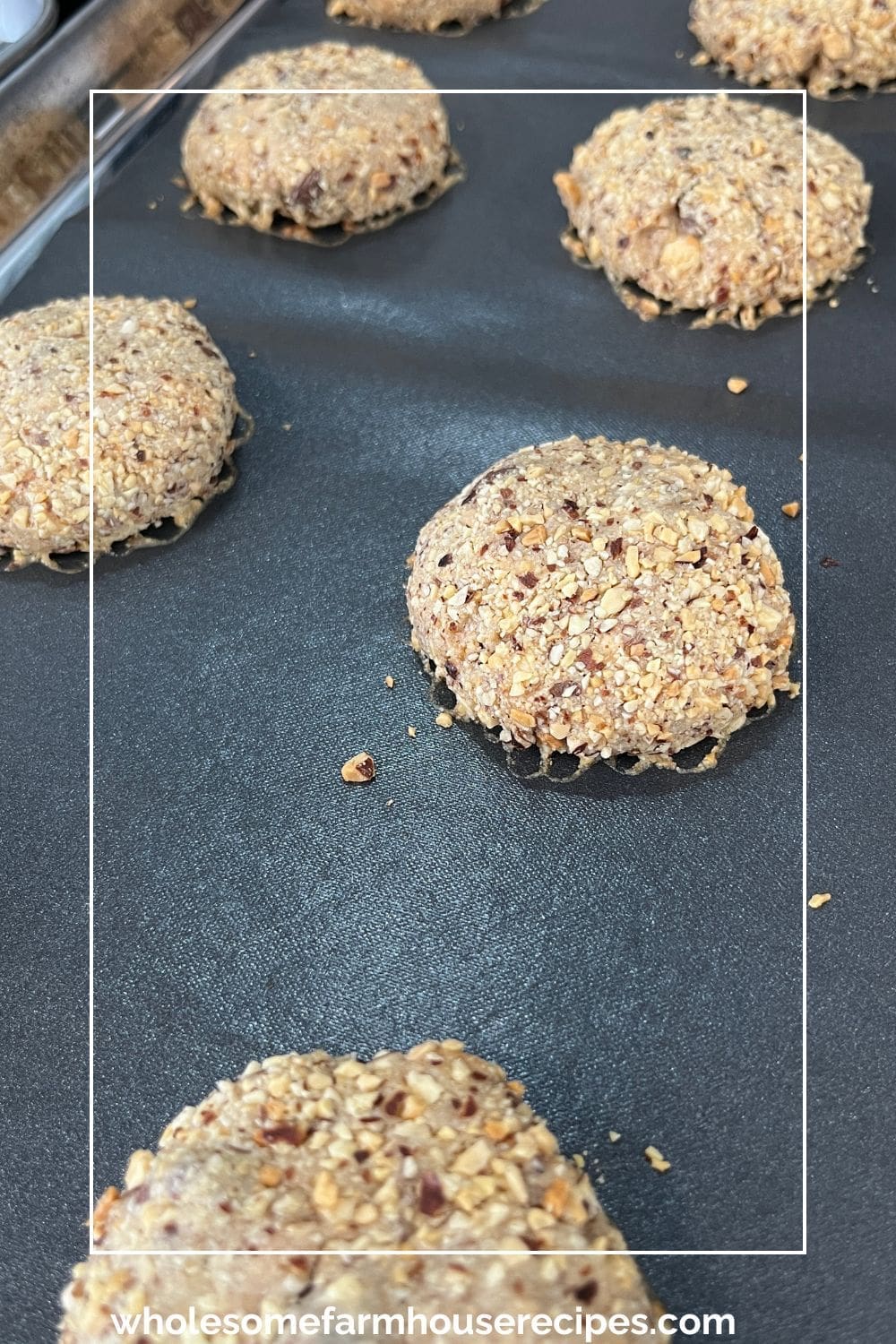
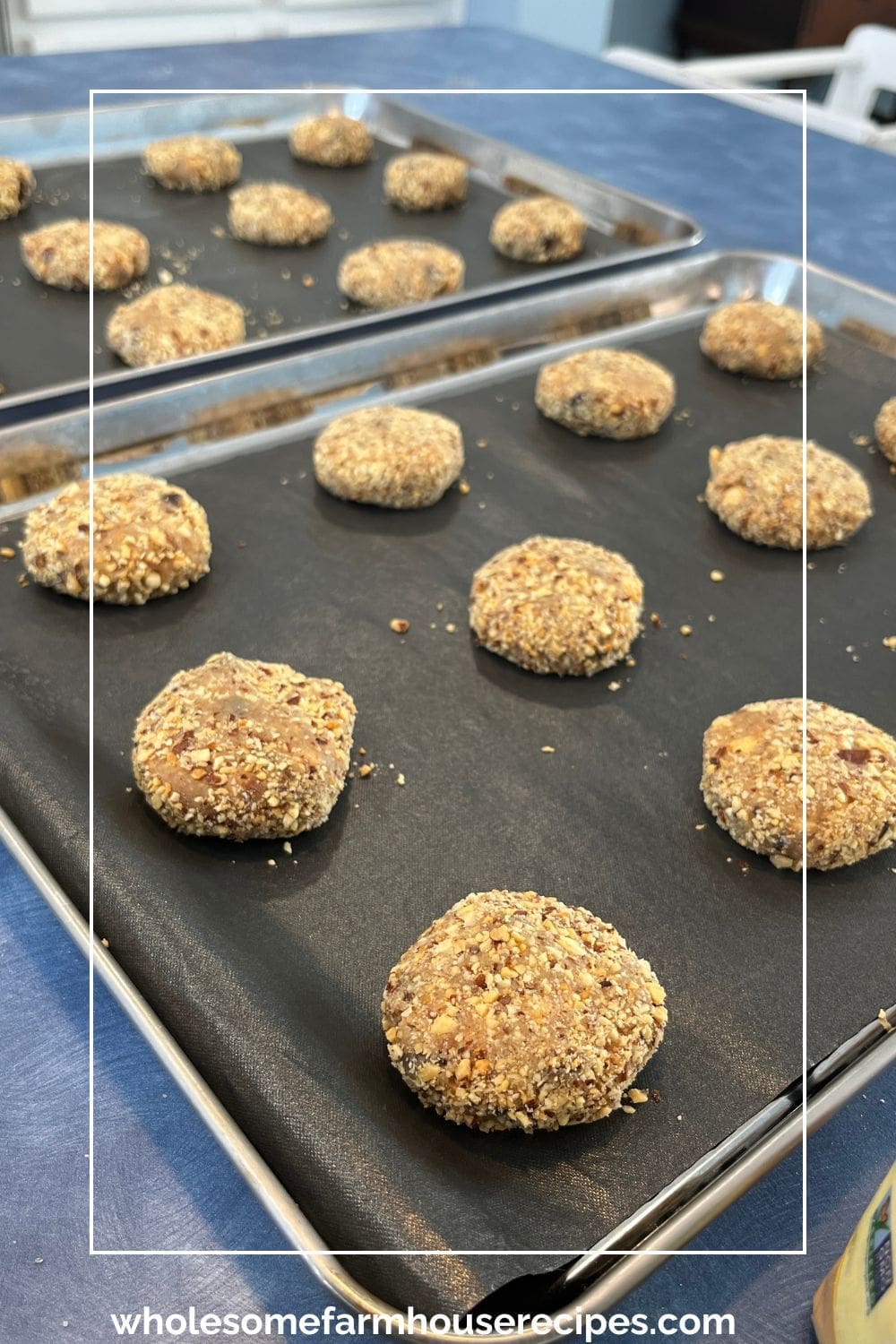
- Roll each ball in the finely chopped almonds to coat the outside. Press gently so the almonds stick. This creates the crunchy crust that contrasts with the soft center.
- Gently press each ball between your palms until it is about ½ inch thick. Do not press too hard or the edges will crack. If they crack, the cookies will spread unevenly and lose their shape.
- Place cookies on the prepared baking sheets and bake for 12 to 15 minutes. Rotate the pans halfway through for even baking. The cookies are done when the edges are lightly browned and the centers no longer give when you press them gently.
- Sprinkle with flaky sea salt immediately after removing from the oven. The salt sticks better when the cookies are hot. It also enhances the chocolate and almond flavors instead of just tasting salty.Flaky Sea Salt
- Let the cookies cool on the pan for 5 minutes before transferring to a wire rack. If you move them too soon, they will break apart because the centers are still soft.
Your Own Private Notes
Notes
How to Know It Is Done
The difference between perfect and overbaked is about 90 seconds, so visual and sensory cues matter more than a timer. The edges should be lightly golden brown, not dark. If the edges turn deep brown, the cookies are already overbaked and will be crunchy all the way through instead of chewy in the middle. You want a pale golden color that looks barely set. The centers should no longer look wet or shiny. When you gently press the center of a cookie with your finger, it should feel firm and spring back slightly. If it leaves a deep indent or feels liquidy, give it another 2 minutes. If it feels rock-hard, you waited too long. The smell is a good secondary indicator. When the cookies are almost done, you will smell toasted almonds and caramelized sugar. If you start smelling burnt sugar or a sharp, acrid scent, pull them out immediately. Your nose knows before your eyes do. The almond coating should look toasted, not pale. The finely chopped almonds on the outside will darken slightly as they bake. If they are still white, the cookies need more time. If they are dark brown, they are overdone. Check one cookie from the center of the pan and one from the edge. Edges bake faster, so if the edge cookie is perfect, the center ones might need another minute. Rotate the pan and check again in 60 seconds.Nutrition
Tips from the Pros
These are the small moves that separate home bakers from people who make cookies that actually taste professional.
- Chill the dough for 30 minutes if it feels too soft to handle. Warm dough spreads too fast in the oven and results in flat, greasy cookies. If your kitchen is hot or the dough feels sticky, wrap it and refrigerate it before shaping. Cold dough holds its shape better.
- Use a scale to portion the dough. Eyeballing it means some cookies will be bigger than others, which means uneven baking. Weigh each ball at 40 grams for consistent size and texture every time.
- Do not skip the flaky sea salt. It sounds optional, but it is not. The salt amplifies the chocolate and almond flavors and cuts through the sweetness. Without it, the cookies taste flat and one-dimensional.
- Rotate your pans halfway through baking. Most ovens have hot spots. Rotating ensures even browning and prevents one side from overbaking while the other side stays pale.
- Use parchment paper, not a greased pan. Butter or oil on the pan makes the bottoms brown too fast. Parchment creates a barrier that promotes even baking and makes cleanup easier.
- Let the cookies rest on the pan for 5 minutes before moving them. This is when they finish setting. If you move them too soon, the centers will collapse and the cookies will break apart.
These small adjustments are what make the difference between cookies that look homemade and cookies that look like they came from a bakery.
Pairing Suggestions
These cookies are rich enough to stand alone, but pairing them smartly makes them feel more intentional.
Cold milk is the obvious move, but oat milk works better. The nuttiness in oat milk mirrors the roasted almonds and creates a more cohesive flavor experience than regular dairy. If you want to go full indulgent, try whole milk that has been chilled until it is almost icy.
Espresso or strong black coffee cuts through the sweetness. The bitterness balances the chocolate and the roasted almond flavor plays well with coffee’s natural nuttiness. Skip the cream and sugar. You want the contrast, not more sweetness.
A glass of tawny port or bourbon works if you are serving these after dinner. The caramel notes in both spirits complement the brown sugar undertones in the cookie, and the alcohol cuts through the butter richness. Pour a small amount. You are not trying to get drunk, just enhance the flavors.
Pair them with vanilla ice cream if you are serving them warm. The cold, creamy ice cream melts into the warm cookie and creates a texture contrast that is hard to beat. Use plain vanilla, not anything flavored. You want the cookie to be the star.
The key is balancing richness with something that either complements the nuttiness or cuts through the butter and chocolate.
Variations and Swaps
This recipe is flexible enough to handle changes without falling apart.
Swap the chocolate chips for chopped dark chocolate. Chips are engineered to hold their shape, which is fine, but chopped chocolate melts into gooey pockets that taste more luxurious. Use 70% cacao if you want a more bitter, adult flavor. Use 60% if you want it sweeter.
Replace half the almonds with hazelnuts. Roast them the same way and chop them the same way. Hazelnuts have a deeper, almost caramelized flavor that pairs well with chocolate. You can also use all hazelnuts if you want to turn this into a completely different cookie.
Add ½ teaspoon of almond extract to the egg mixture. This makes the almond flavor more pronounced, almost to the point of tasting like marzipan. If you love almonds, do it. If you want the flavor to stay subtle, skip it.
Use brown sugar instead of granulated sugar. Brown sugar adds a molasses note and makes the cookies chewier. The texture will be slightly denser, but the flavor will be richer. Use light brown sugar, not dark, unless you want a strong molasses taste.
Make them gluten-free by swapping the all-purpose flour for a 1-to-1 gluten-free baking blend. The texture will be slightly more crumbly, but the flavor stays the same. Do not use almond flour as a substitute. It will make the cookies greasy and dense.
Add ½ cup of dried cherries or cranberries for a tart contrast. Chop them roughly and fold them in with the chocolate chips. The tartness cuts through the richness and adds a chewy texture that works well with the crunchy almond coating.
The structure of this recipe is strong enough that you can experiment without ruining the final result.
Storage Tips
How you store these determines whether they stay chewy or turn into dry, crumbly disks.
Store them in an airtight container at room temperature for up to 5 days. Layer them with parchment paper if you are stacking them to prevent the almond coating from rubbing off. Do not refrigerate them. The cold air dries them out and makes them hard.
If you want to freeze them, freeze the dough balls before baking. Shape the dough, coat them in almonds, press them flat, and freeze them on a baking sheet until solid. Transfer to a freezer bag and store for up to 3 months. Bake them straight from the freezer, adding 2 to 3 extra minutes to the baking time.
You can also freeze baked cookies for up to 2 months. Let them cool completely, then freeze them in a single layer on a baking sheet. Once frozen, transfer to a freezer bag. Thaw at room temperature for 30 minutes before eating, or warm them in a 300°F oven for 5 minutes to refresh the texture.
To reheat, use the oven, not the microwave. Microwaving makes them chewy in a weird, gummy way. The oven crisps up the edges and softens the center without making them soggy. Heat at 300°F for 5 to 7 minutes.
Proper storage is the difference between cookies that taste fresh for days and cookies that taste stale by tomorrow.
These cookies are the kind you make when you want something that actually tastes like the ingredients on the label. The almond flavor is not a suggestion. The texture is not an accident.
They stay chewy longer than most cookies because of the cold butter technique, and the almond coating adds a textural contrast that makes each bite more interesting than the last. Make them once and you will understand why the extra steps matter.


A sturdy and delicious cookie I enjoy with my morning coffee.