
Your thick rhubarb stalks aren’t ruined. A few smart cuts and one steaming trick turn woody rhubarb into tender, bakeable perfection in under 20 minutes.
You pull thick rhubarb stalks from the garden and realize they feel more like tree branches than tender pie filling.
The outer skin is tough. The inside looks stringy. You wonder if they’re even worth using or if you should toss them and wait for younger, thinner stalks next season. But here’s the thing: thick rhubarb isn’t bad rhubarb. It just needs a little extra attention before it hits your baking dish.
Most people assume thick stalks are too woody to work with, so they avoid them entirely. That’s a huge waste. With the right prep techniques, those monster stalks turn into the same soft, sweet filling that thinner stalks deliver. You just need to know how to cut, peel, and cook them properly.
Stick with me, and you’ll never throw out thick rhubarb again.

Why Thick Rhubarb Stalks Get Tough in the First Place
Thick stalks develop more fibrous tissue as they mature, especially later in the growing season. The outer skin thickens to protect the plant, and the inner strands become more pronounced. This doesn’t mean the rhubarb is inedible. It just means the texture won’t break down as easily during baking unless you intervene first.
Here’s what happens when you skip the prep:
- The outer skin stays rubbery even after baking
- Stringy fibers create an unpleasant mouthfeel in pies and crisps
- The rhubarb takes longer to soften, leading to uneven cooking
- You end up with chunks that are mushy on the outside but still tough in the center
When you prepare thick stalks correctly, you remove the barriers that prevent them from breaking down. The result is tender, evenly cooked rhubarb that tastes just as good as the skinny stalks everyone chases.

The Three Core Techniques for Taming Thick Stalks
You only need three moves to turn tough rhubarb into something worth baking with.
1. Peel the outer skin if it feels thick or waxy. Run a vegetable peeler down each stalk, removing the outer layer entirely. This eliminates the toughest part of the rhubarb and exposes the softer tissue underneath. You don’t need to peel every stalk, but if you can feel resistance when you press your thumbnail into the skin, it’s worth peeling.
2. Slice the stalks into smaller, thinner pieces. Instead of cutting thick stalks into standard half-inch chunks, go thinner. Quarter-inch slices work better because they cook faster and more evenly. If the stalk is especially wide, cut it lengthwise first, then slice it crosswise. This reduces the surface area and helps the rhubarb break down during baking.
3. Blanch the rhubarb before baking. Drop your sliced rhubarb into boiling water for 60 to 90 seconds, then drain and pat dry. This quick blanch softens the fibrous strands without cooking the rhubarb completely. It’s especially useful for pies and tarts where you want the filling to hold its shape but still deliver a tender bite. Skip this step for crisps and crumbles where the rhubarb cooks longer and has more time to soften on its own.
These three techniques work together or independently depending on how tough your stalks are. For moderately thick stalks, peeling and slicing might be enough. For truly woody stalks, use all three.
Step-by-Step Instructions for Prepping Thick Rhubarb
Here’s the full process from stalk to oven-ready rhubarb.
- Rinse the stalks under cold water. Remove any dirt or debris clinging to the surface. Pat the stalks dry with a clean towel so your knife doesn’t slip.
- Trim off the leaves and the dry end. Rhubarb leaves are toxic, so cut them completely off and discard them. Trim the base of the stalk where it looks dry or brown.
- Check the skin thickness. Press your thumbnail into the outer layer. If it feels waxy or resists pressure, grab a vegetable peeler and remove the skin in long, downward strokes. If the skin feels thin and yields easily, skip the peeling step. If you are good with a pairing knife, I find that getting your knife just under the outer layer on the end and pulling it down is a quick way to remove the tough outer skin.
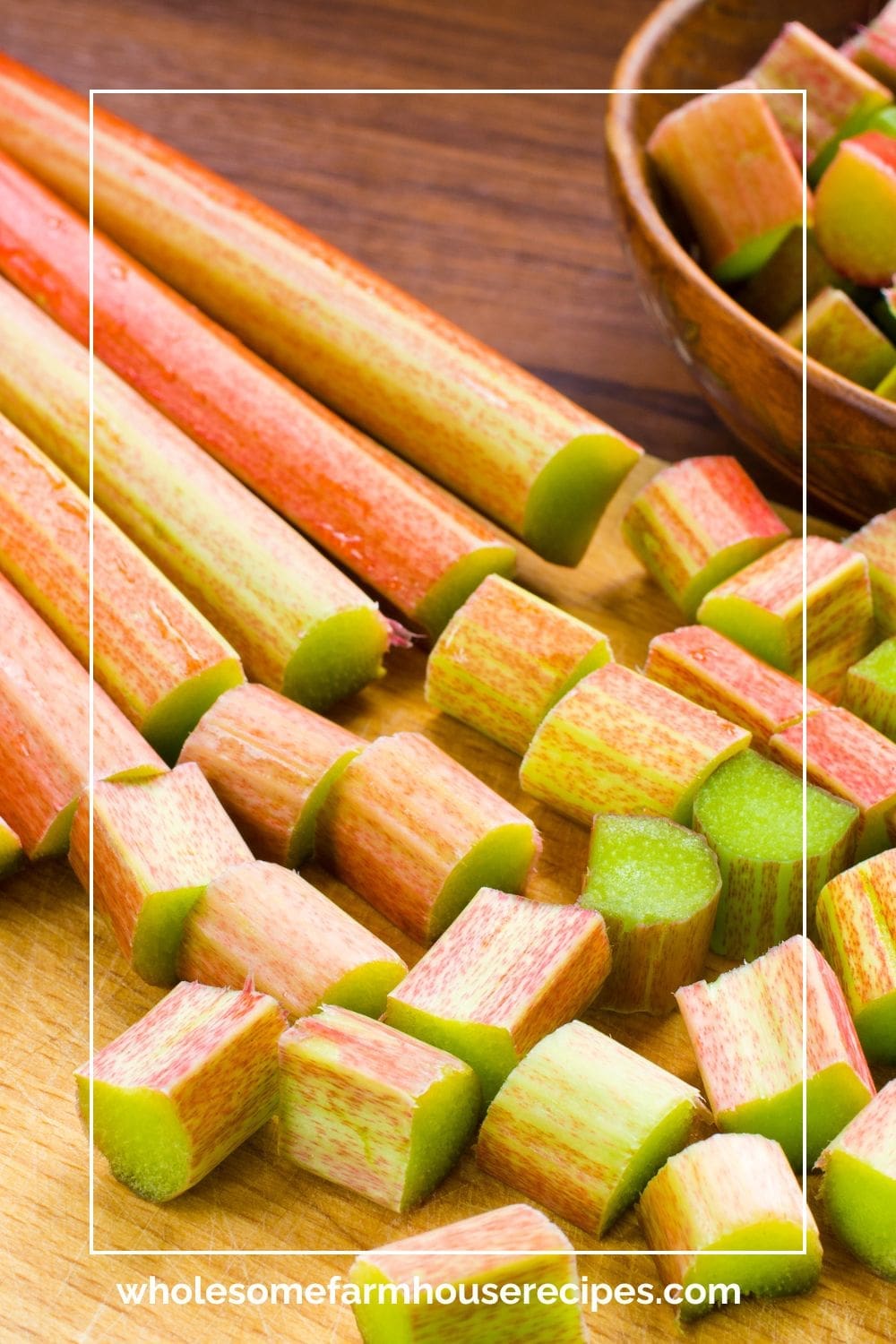
- Cut the stalks lengthwise if they’re wider than your thumb. Lay the stalk flat on your cutting board and slice it in half or into thirds depending on the width. This makes the pieces more uniform and easier to work with.
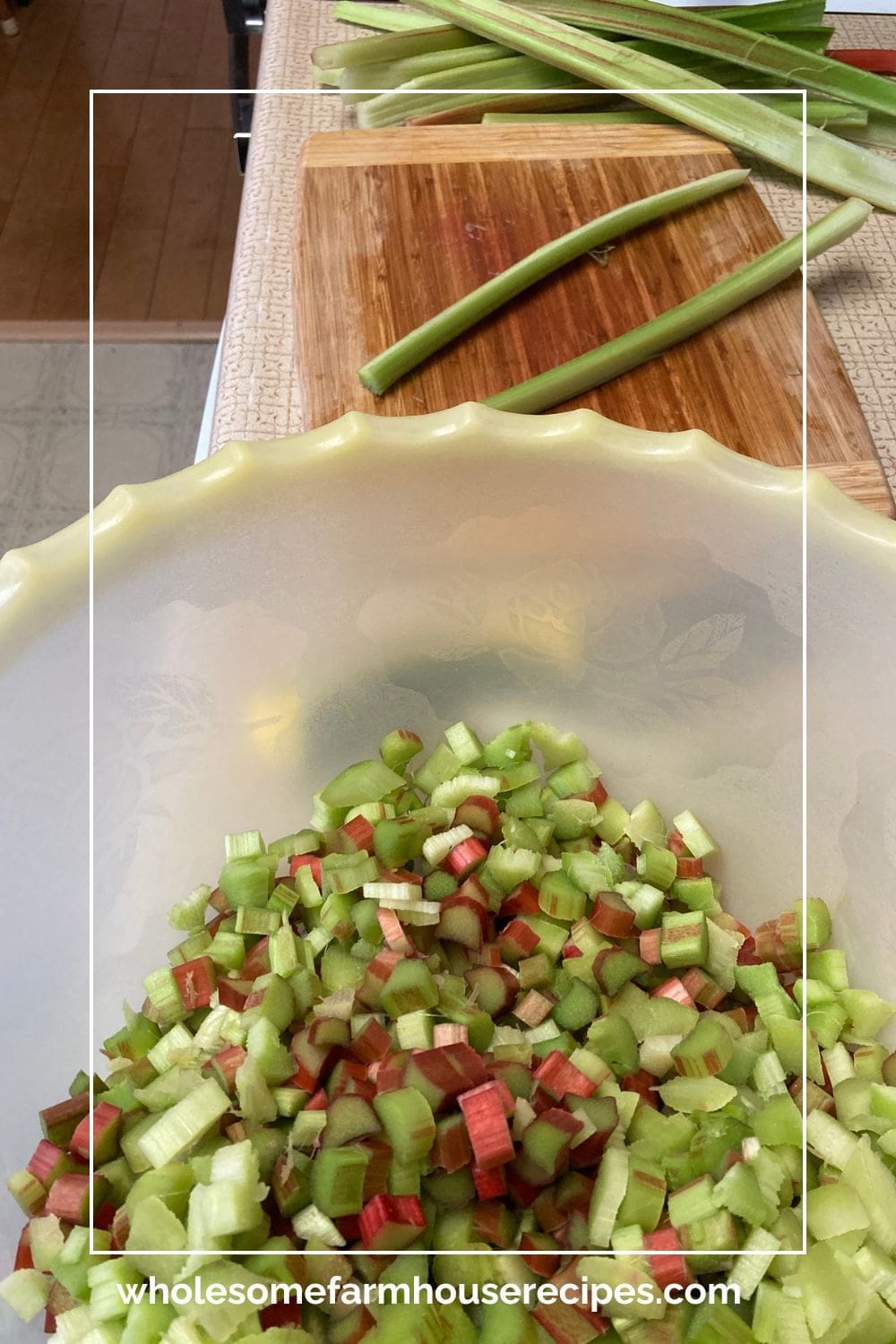
- Slice the rhubarb crosswise into quarter-inch pieces. Keep your slices consistent so they cook evenly. If you’re making a pie, aim for pieces that are roughly the same size as your apple or berry chunks.
- Blanch the slices if your recipe calls for shorter baking times. Bring a pot of water to a rolling boil, drop in the rhubarb, and let it sit for 60 to 90 seconds. Drain immediately and spread the pieces on a towel to cool and dry. Don’t skip the drying step or your filling will be watery.
Once your rhubarb is prepped, use it in any recipe that calls for fresh rhubarb. The texture will match what you’d get from thinner stalks, and no one will know you started with the tough ones.
Common Mistakes That Ruin Thick Rhubarb
Even with the right techniques, a few missteps can wreck your final dish.
Leaving the stringy fibers intact. If you cut thick rhubarb without peeling or slicing it thin enough, those fibrous strands stay tough. They won’t soften during baking, and they’ll create a chewy, unpleasant texture in your filling. Always peel stalks that feel rigid or waxy, and don’t be afraid to cut smaller than you think you need to.
Blanching for too long. If you leave rhubarb in boiling water for more than two minutes, it starts to cook through. You want to soften the fibers, not turn the rhubarb into mush before it even hits the oven. Set a timer and drain the rhubarb the second it’s done.
Using thick stalks in recipes that need firm chunks. If you’re making a compote or jam where the rhubarb needs to hold its shape, thick stalks can work against you. They take longer to break down, and by the time they’re soft, the rest of your mixture might be overcooked. Stick with thinner stalks for recipes where texture matters, or blanch and slice your thick stalks extra thin to speed up the process.
Skipping the drying step after blanching. Wet rhubarb adds extra moisture to your filling, which can turn a crisp topping soggy or make your pie crust bottom doughy. After blanching, spread the rhubarb on a clean kitchen towel and pat it completely dry before adding it to your recipe.
Pro Tips for Getting the Most Out of Thick Stalks
Thick rhubarb has some hidden advantages if you know how to work with them.
Thicker stalks often taste less tart than thin ones. The extra maturity mellows the acidity slightly, which means you might need less sugar in your recipe. Taste a small piece raw before you start baking, and adjust your sweetener accordingly.
Save the peels for rhubarb syrup. Don’t throw away the skins you peel off. Simmer them in water with sugar to make a bright, tangy syrup that’s perfect for cocktails, lemonade, or drizzling over yogurt.
Blanched rhubarb freezes beautifully. If you have more thick stalks than you can use right away, prep them using the blanching method, dry them completely, and freeze them in a single layer on a baking sheet. Once frozen, transfer the pieces to a freezer bag. They’ll stay good for up to a year and won’t turn mushy when you thaw them.
Combine thick and thin stalks in the same recipe. If you only have a few thick stalks, mix them with thinner ones after prepping. The texture will blend together during baking, and you won’t notice any difference in the final dish.
Thick rhubarb doesn’t have to be a compromise. With the right prep work, it delivers the same tender, tangy results you expect from the skinnier stalks that everyone fights over at the farmers market. Now you know how to handle those thick stalks sitting in your garden or fridge, and you’ll never waste another one.
The next time you pull a monster stalk and wonder if it’s worth using, remember that a sharp knife, a vegetable peeler, and 90 seconds of boiling water can turn it into something just as good as the tender stuff. You just have to give it the attention it needs.
Stay connected with Wholesome Farmhouse Recipes
Add Wholesome Farmhouse Recipes as a preferred source in Google Search to make it easier to find our recipes and cooking ideas when you're searching for something delicious to make.


