
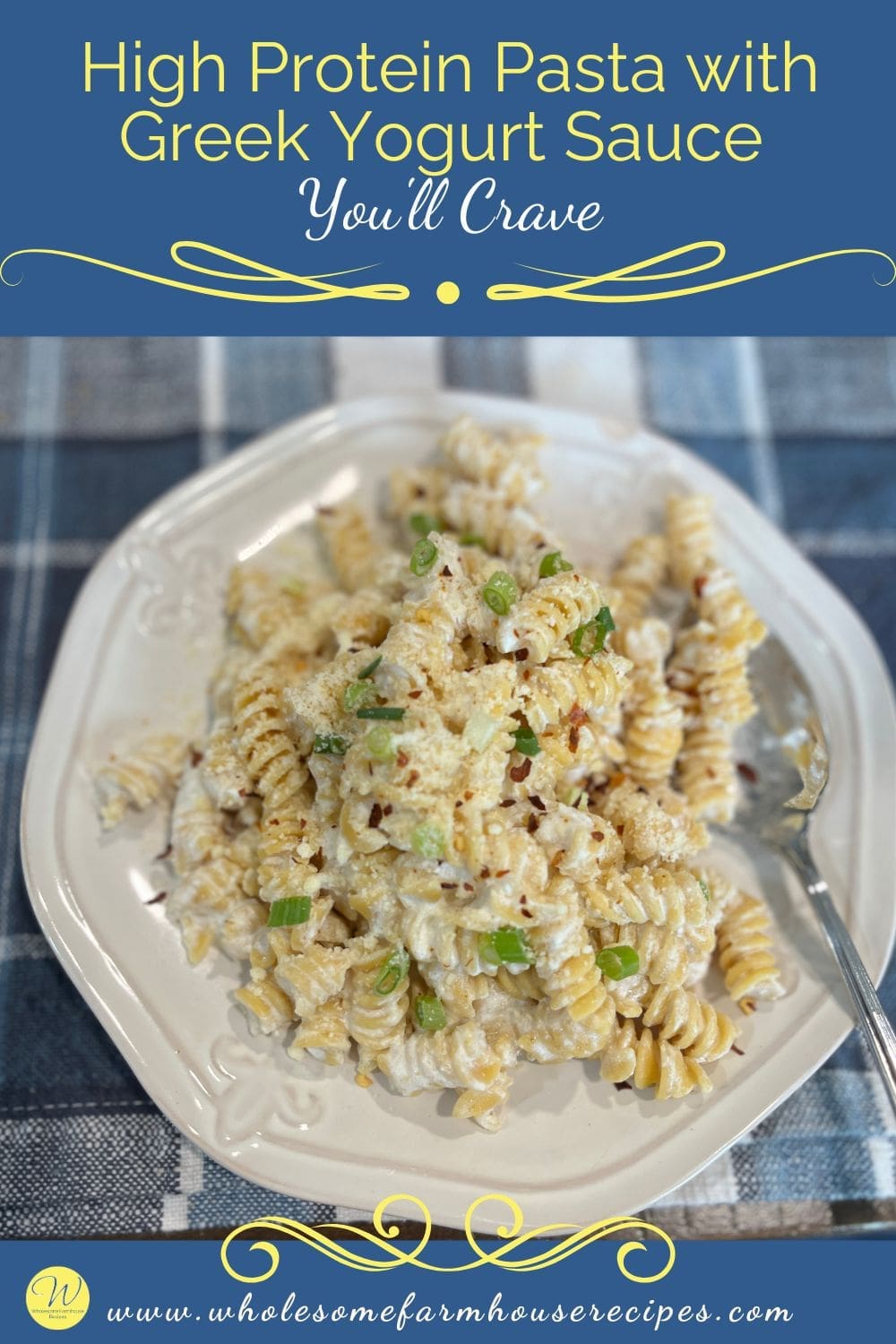
This high protein pasta is the kind of recipe you make when you want something creamy but your body is begging you not to do the heavy cream thing again.
Greek yogurt steps in as the tangy, protein-rich backbone of the sauce, cutting through all that butter and garlic without weighing you down. It is sharp, it is bright, and it clings to protein pasta like it was engineered for it. Which, honestly, it kind of was.
You are not sacrificing richness here. The butter does that job beautifully. You are just swapping out the food coma for a bowl that actually fuels you through the rest of your night.
And the best part is that this comes together faster than ordering takeout.
Why This Recipe Works
Greek yogurt is not trying to be cream, and that is exactly why this sauce works. It brings acidity and tang that balance out the richness of butter in a way that heavy cream never could.
The result is a sauce that feels indulgent but does not coat your mouth or sit like a brick in your stomach.
Plus, you are getting serious protein from both the yogurt and the pasta, which means this dish actually keeps you full instead of sending you back to the kitchen an hour later.
The key move here is tempering the yogurt slowly on low heat. If you crank the heat or dump it all in at once, it will split and turn grainy.
Adding it in two stages gives the yogurt time to warm up gently and emulsify with the butter, creating a smooth, cohesive sauce.
Turning off the heat before adding the pasta is your insurance policy against curdling.
Saving that pasta water is non-negotiable. It is starchy, salty, and works like magic to loosen the sauce without breaking it.
A few splashes bring everything together and give you control over the final texture. It also revives leftovers like nothing else.

High Protein Pasta with Greek Yogurt Sauce You’ll Crave
As an Amazon Associate I earn from qualifying purchases.


Ingredients
Pasta
- 14.5 Ounces Protein Pasta 1 box
Sauce
- 10 Tablespoons Butter (about 1 ¼ sticks)
- 5 Teaspoons Garlic (garlic paste, minced fresh garlic, or jarred minced garlic)
- 1 ¾ Cups Plain Greek Yogurt
- 4 Tablespoons Lemon Juice (about 1½ lemons)
Toppings
- ½ Cup Grated Parmesan Cheese
- ¼ Cup Fresh Chives thinly sliced
- Pinch Red Pepper Flakes
Instructions
- Boil the pasta. Cook the protein pasta according to the package directions. Before you drain it, scoop out one full cup of the starchy pasta water and set it aside. This is your sauce insurance.14.5 Ounces Protein Pasta
- While the pasta cooks, melt 5 ounces of butter in a large skillet over medium heat. Let it fully melt and start to foam slightly, but do not let it brown.10 Tablespoons Butter
- Add the garlic. Stir in the garlic and cook for about 30 seconds, stirring constantly, until it smells incredible but has not taken on any color. Burnt garlic is bitter garlic, and there is no coming back from that.5 Teaspoons Garlic
- Lower the heat and temper the yogurt. Drop the heat to low. Add half of the Greek yogurt to the skillet, stirring constantly until it is fully incorporated and smooth. Then add the second half and stir until the sauce comes together. Turn off the heat completely.1 ¾ Cups Plain Greek Yogurt
- Add lemon. Stir in the lemon juice. This brightens everything and cuts through the richness of the butter.4 Tablespoons Lemon Juice
- Toss the pasta. Add the drained pasta directly to the skillet and toss everything together until every piece is coated. If the sauce feels too thick, add pasta water a few tablespoons at a time until it reaches a silky, glossy consistency.
- Divide the pasta among bowls and top with freshly grated parmesan, chopped chives, and red pepper flakes. Taste and add salt and pepper as needed.½ Cup Grated Parmesan Cheese, ¼ Cup Fresh Chives, Pinch Red Pepper Flakes
Your Own Private Notes
Notes
Tips from the Pros
Professional cooks do not eyeball the yogurt addition, and neither should you. Adding it in two stages on low heat is the difference between a creamy sauce and a broken, grainy mess. If you are nervous about curdling, pull the skillet off the heat entirely before you add the yogurt, then return it to low to gently warm everything through. It takes an extra 30 seconds but eliminates all the risk. Always taste your pasta water before you drain. If it is not well-salted, your sauce will taste flat no matter how much parmesan you pile on top. The water should taste like the ocean, and that seasoning carries through to the final dish. Use full-fat Greek yogurt, not the low-fat stuff. Fat content stabilizes the yogurt and helps it stay smooth under heat. Low-fat or nonfat yogurt is more likely to curdle, and the sauce will not have the same body or richness. Grate your parmesan fresh. Pre-shredded cheese is coated with anti-caking agents that prevent it from melting smoothly into the sauce. A microplane and a wedge of real parmigiano-reggiano will give you a creamier, more cohesive result. If you are making this for a crowd, prep your garlic and measure out your yogurt ahead of time so you can move fast once the pasta is done.Nutrition
Pairing Suggestions
For sides, keep it simple.
- A bitter green salad with arugula, radicchio, and a sharp vinaigrette balances the richness of the pasta.
- Roasted broccolini with lemon and olive oil works too, especially if you want to double down on the Mediterranean vibe.
- Garlic bread feels redundant here since the pasta is already deeply garlicky, but if you must, go for a seeded multigrain toast with olive oil instead of butter.
This is the kind of dish that does not need a lot of competition on the plate, so let it be the star.

Variations and Swaps
If Greek yogurt is not your thing or you are just looking to switch it up, cottage cheese works beautifully as a substitute. Blend it smooth in a blender or food processor first so you do not end up with curds in your sauce, then use it in the exact same way you would use the yogurt.
The flavor is milder and slightly sweeter, but it still brings that creamy, high-protein punch. You will want to add an extra squeeze of lemon to keep the brightness.
For protein, grilled chicken is the obvious add. Slice it thin and toss it in with the pasta, or lay it on top and let people build their own bowls. Rotisserie chicken works just as well and saves you the trouble of firing up the grill. Shrimp is another killer option. Sauté them separately with a little garlic and red pepper flakes, then fold them in at the end so they stay tender.
Vegetable swaps depend on the season. In the summer, toss in halved cherry tomatoes and fresh basil right before serving. The tomatoes will soften slightly from the residual heat and release their juices into the sauce. In the fall and winter, roasted butternut squash or sautéed mushrooms add an earthy richness that pairs well with the tang of the yogurt.
If you want to lean into the Mediterranean angle, swap the chives for fresh dill and add a handful of crumbled feta on top. It shifts the whole flavor profile and feels more like something you would eat on a Greek island.
For a spicier version, bloom the red pepper flakes in the butter along with the garlic. This infuses the entire sauce with heat instead of just giving you occasional spicy bites. If you want even more kick, add a spoonful of calabrian chili paste or a few dashes of hot sauce when you stir in the lemon.
No matter how you tweak it, the base formula stays solid. Butter, garlic, tangy dairy, lemon, pasta. Everything else is just decoration.
Storage Tips
This pasta keeps well in the fridge for up to four days, but the sauce will thicken as it sits. That is where your reserved pasta water becomes a lifesaver.
When you reheat, add a few tablespoons of water or even a splash of milk to loosen everything back up.
Reheat gently on the stove over low heat, stirring constantly, or microwave it in 30-second intervals, stirring in between. High heat will cause the yogurt to separate, so keep it low and slow.
Do not freeze this. Dairy-based sauces with yogurt do not hold up well in the freezer. The texture breaks down when thawed, and you will end up with a grainy, watery mess. If you know you are going to have leftovers and you want to meal prep, make the sauce fresh each time and just cook extra pasta to have on hand.
Store the pasta in an airtight container, and if you are planning to take it for lunch, pack the toppings separately. Chives, parmesan, and red pepper flakes stay fresher and add more punch when they are added right before eating instead of sitting in the fridge overnight.

Leftover Transformations
Cold leftover pasta is not the vibe, but turning it into something completely different is. Toss it in a hot skillet with a little olive oil until the edges get crispy and golden. The yogurt sauce caramelizes slightly and you end up with a pasta pancake situation that is absurdly good. Top it with a fried egg and you have breakfast.
You can also thin out the leftovers with chicken or vegetable stock and turn it into a creamy pasta soup. Add some spinach or kale, a handful of white beans, and a drizzle of olive oil. It becomes a completely different meal that still tastes intentional.
If you are feeling ambitious, stuff the pasta into bell peppers, top with breadcrumbs and more parmesan, and bake until everything is golden and bubbling. It is basically a deconstructed stuffed pepper, but the tangy sauce keeps it from feeling heavy.
Leftover pasta is just a blank canvas. Add heat, add texture, add an egg. You will be fine.
This is the kind of dinner that rewards you twice. Once when you eat it hot and fresh, and again the next day when you realize you have options.
Stay connected with Wholesome Farmhouse Recipes
Add Wholesome Farmhouse Recipes as a preferred source in Google Search to make it easier to find our recipes and cooking ideas when you're searching for something delicious to make.


So easy, quick, and filling.