
This Mock Zucchini Pineapple Canning Recipe is amazing, and I like it better than the canned pineapple you can purchase in the store. If you’ve ever looked at your garden overflowing with zucchini and wondered what to do with all that extra produce, this is a perfect way to use it up.
It’s a delicious way to preserve zucchini while giving it a sweet, tropical twist with pineapple. Even if it’s your first time canning, this is an easy recipe. We’ll walk you through everything from preparing the zucchini to safely processing your jars.
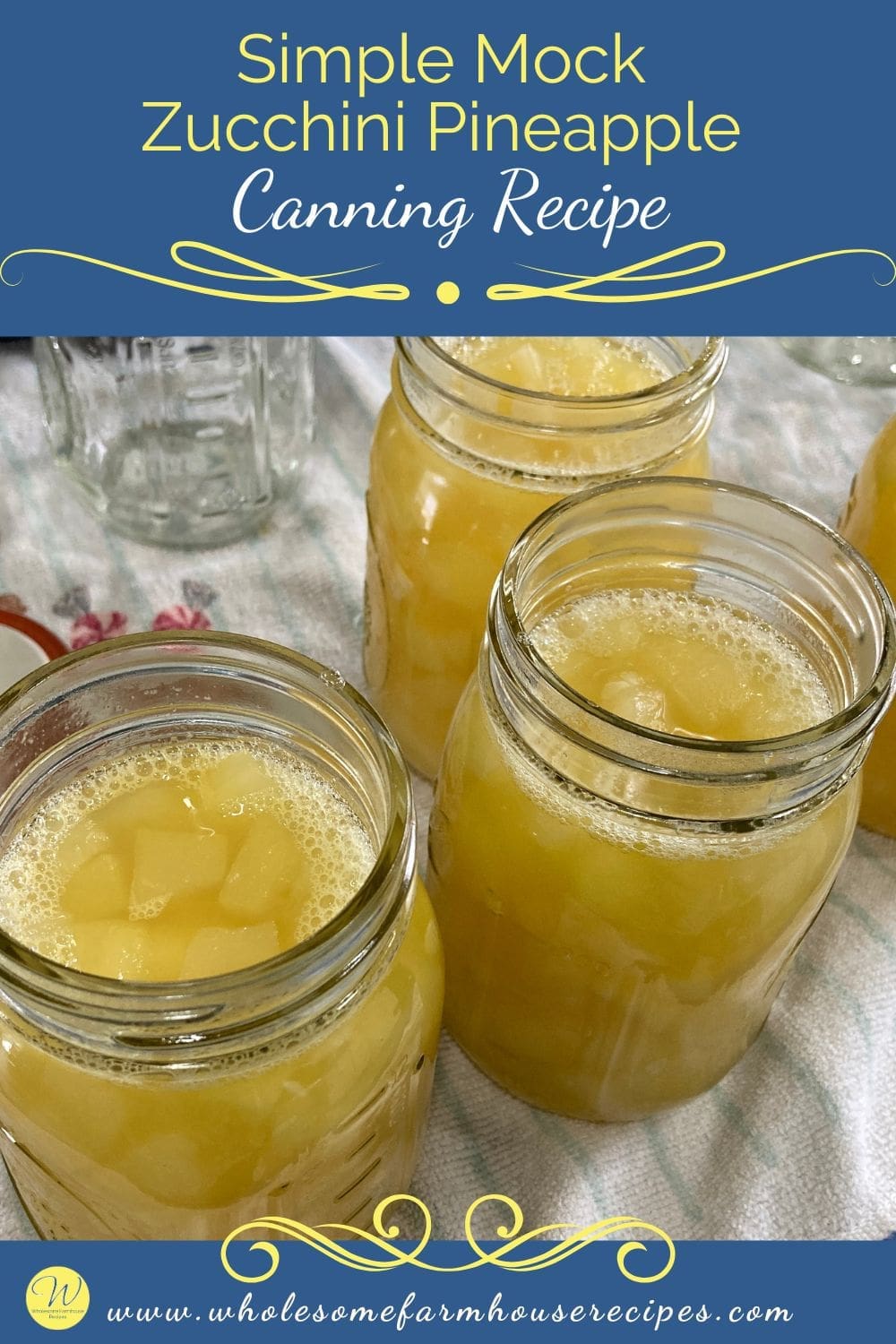
Simple Zucchini Recipe for Those Over Grown Fruits
Whether you have lots of zucchini, a few large zucchini plants, or just a craving for something sweet and savory, this recipe is a great way to turn your harvest into a shelf-stable treat.
Some people even call it mock pineapple zucchini, because it tastes so close to the real thing.

Simple Mock Zucchini Pineapple Canning Recipe
As an Amazon Associate I earn from qualifying purchases.
Kitchen Essentials


Ingredients
- 16 Cups Zucchini Peeled and diced into bite size pieces (about ½-inch cubes)
- 1 ½ Cups Sugar
- 1 ½ Cups Lemon Juice
- 46 Ounces Pineapple Juice 1 large can
Instructions
- Prepare the zucchini. Peel your zucchini and cut it into ½-inch cubes. If you have large zucchini with big seeds, scoop them out for the best texture.16 Cups Zucchini
- In a large pot or Dutch oven, combine the zucchini, sugar, lemon juice, and pineapple juice. Bring the mixture to a boil over medium-high heat, then reduce to medium heat and simmer for 20 minutes. Stirring occasionally.1 ½ Cups Sugar, 1 ½ Cups Lemon Juice, 46 Ounces Pineapple Juice
- Sterilize Jars. If this is your first time canning, see the notes section for more directions. This recipe makes 8-9 pints.
- Fill jars. Carefully ladle the hot mixture into sterilized jars, leaving ½-inch headspace. De-bubble by gently tapping the jars or running a non-metal knife along the inside edges. Add more hot mixture if needed.
- Seal and wipe jars. Wipe the jar rims with a wet paper towel to remove any residue. I like to use paper towel dipped in a bit of vinegar. Place the lids and rings on. The rings should just be barely tight.
- Process jars. Using a boiling-water canner, process pint jars for 20 minutes. Important: Don’t start timing until the water is at a rolling boil.
- Remove jars carefully and let them sit on a towel on your counter for 24 hours. After that, check the seals. Properly sealed jars will have a concave lid that doesn’t move when pressed.
- Label and store. Wipe jars clean, label them with the date, and store in a cool, dark place. Your zucchini pineapple cans will keep for up to a year if stored properly.
Your Own Private Notes
Notes
How to Sterilize Jars and Lids
Properly sterilizing jars and lids ensure your zucchini pineapple preserves are safe and will last. Here’s a simple method for beginners:- Wash thoroughly
Wash jars, lids, and rings in hot, soapy water. Rinse well to remove any soap residue. - Sterilize jars
- Place jars in a large pot or boiling-water canner.
- Fill the pot with enough water to cover the jars completely.
- Bring the water to a boil and let the jars boil for at least 10 minutes.
- Keep the jars in hot water until you’re ready to fill them. This prevents thermal shock when adding your hot zucchini mixture.
- Sterilize lids
- Lids should not be boiled for a long time, as this can damage the sealing compound.
- Place lids in a small saucepan of hot, but not boiling, water for 2–3 minutes.
- Work with hot jars
- Using tongs or jar lifters, carefully remove hot jars from the water, allowing excess water to drip off.
- Fill jars immediately with your hot zucchini pineapple mixture to maintain safety and prevent contamination.
Tips for Success
- Oversized Zucchini. For this type of recipe I prefer to use the oversized zucchinis. It usually takes about 3 large ones.
- Peeling and cutting zucchini. Peel your zucchini and cut it into uniform ½-inch cubes. Consistent sizing ensures an even texture and helps the zucchini absorb the pineapple flavor.
- Remove large seeds. If your zucchini has large seeds, scoop them out for a better finished product.
- De-bubbling jars. After filling jars, run a knife or small spatula along the inside edges to release any trapped air bubbles. This prevents gaps and ensures a proper seal.
- Wipe jar rims carefully. Even a small drop of liquid on the jar rims can prevent a seal. Wipe with a clean, damp paper towel before adding lids and rings.
- Headspace matters. Leave ½-inch headspace in each jar. This allows for expansion during processing and helps create a vacuum seal.
- Use a rolling boil. Only start the boiling-water canner timer once the water is at a rolling boil. This ensures safe home food preservation.
- Check your finished product. After jars have cooled for 24 hours, press the lid centers. A proper seal will not flex up and down.
Nutrition
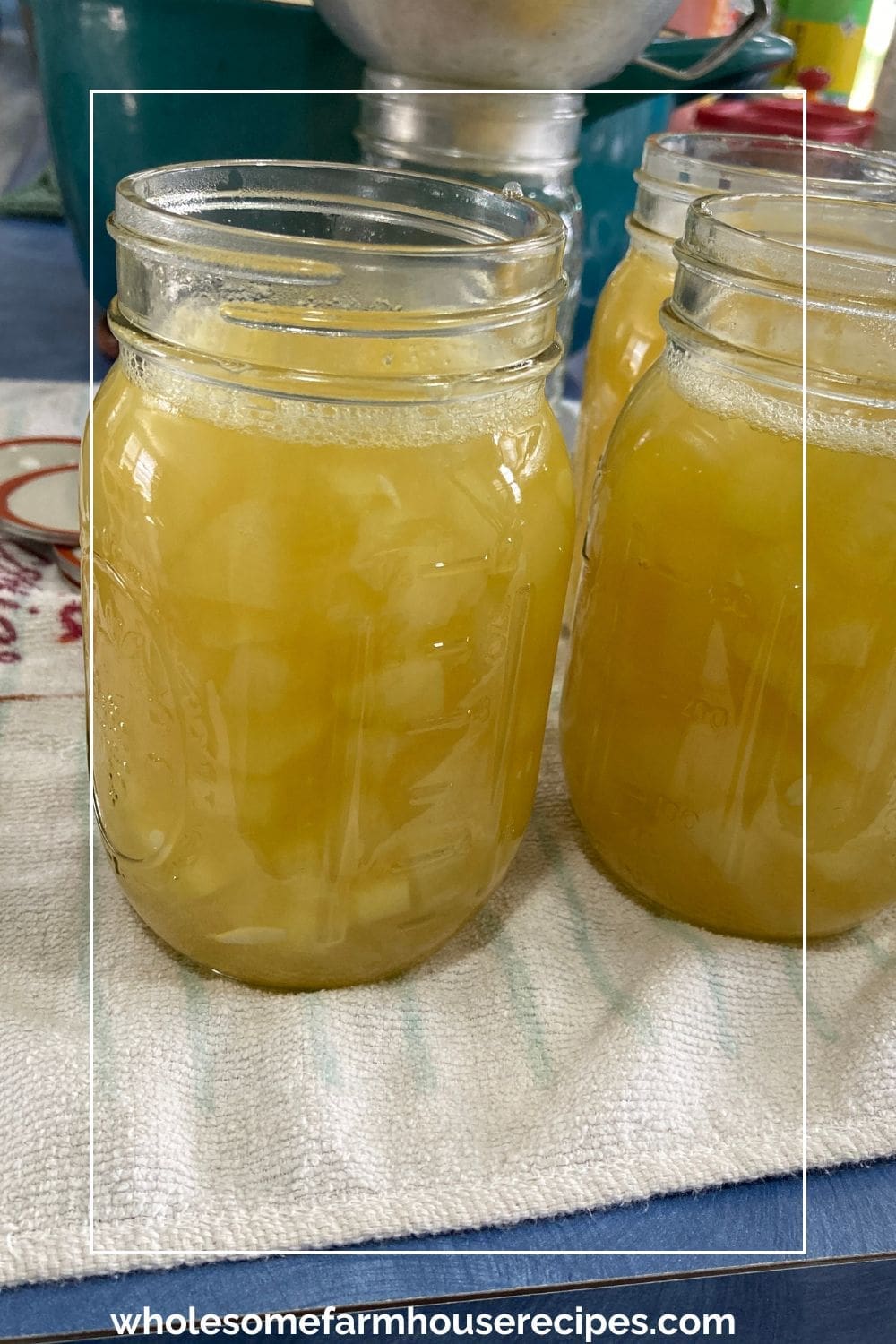
Recipe Variations
- Half-pint jars. Perfect for smaller batches or gifting, especially if your harvest yields a lot of zucchini.
- Combine pineapple juice with apple juice. For a slightly more tropical flavor.
- Zucchini tidbits in juice. Treat your finished product like canned pineapple tidbits. Great for desserts, salads, or savory dishes.
Storage
- Shelf life. Store sealed jars in a cool, dark place. Your zucchini pineapple cans should keep for up to 12 months if stored properly.
- After opening. Once opened, refrigerate and use within 1–2 weeks. Treat it like you would canned pineapple or other high-acid canned fruits.
- Label jars. Always mark your jars with the date of canning for easy reference.
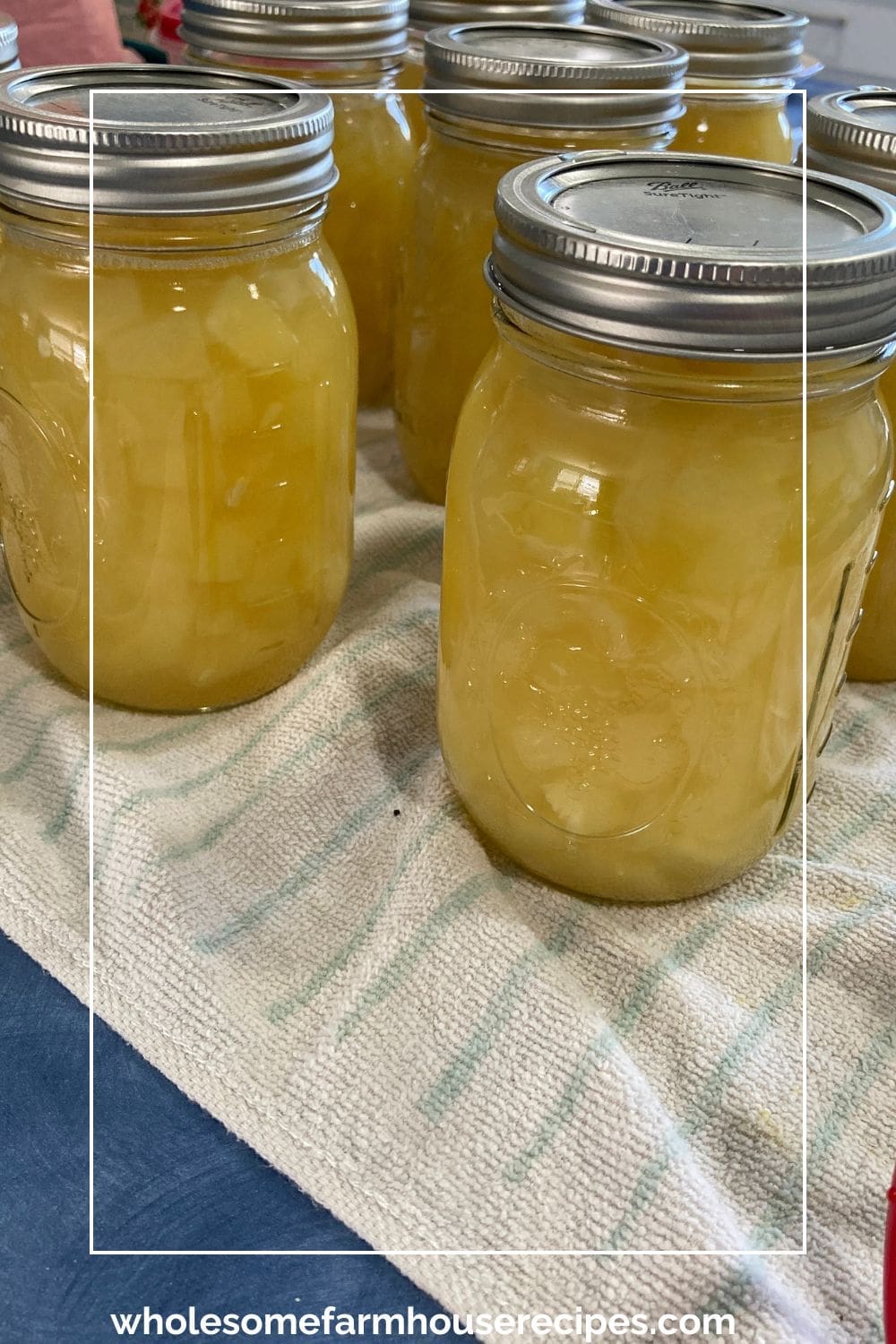
Why Try This Recipe?
Not only is this a great recipe for using up lots of zucchini from your garden, but it’s also a fun way to practice home canning safely.
We love the taste of this amazing faux pineapple made from zucchini. It’s a crowd favorite and a perfect gift for friends and family.
Even if you’ve never done water bath canning or pressure canning, this recipe is approachable for beginners while still being rewarding for experienced home food preservers.


My family loved this!