
Last updated on February 5th, 2026 at 08:16 am
Learn how to store fresh eggs safely, including farm-fresh and store-bought eggs, plus shelf life, refrigeration tips, and signs eggs have gone bad. Storing food properly saves money and keeps the food safe and fresh for future use in lots of delicious recipes.
If you’re like me, you have a small flock of backyard chickens that provide fresh farm eggs every day. These days, a lot of people are homesteading and raising chickens as a fun way to bring the whole family together. Eventually, the baby chicks will grow and begin to produce eggs. Sometimes, there are more than we can use in a day. Therefore, we should be cleaver in storing and using them.
Even if you don’t own your own chickens you could end up with extra raw eggs on your hands. Maybe you get fresh eggs from your local small farms or local farmers markets every week. Even if you purchase yours from the grocery store and find a sale, it is smart to store them properly to extend the freshness as long as you can. Therefore, it’s good to know how to store fresh eggs properly so they last for at least a few weeks. Here are some tips.
Fresh eggs are a real gift — whether they come from your own backyard flock, a friend’s hens, or your local farmers market. But to get the most flavor, quality, and shelf life out of every egg, proper storage makes all the difference.
This guide breaks down how to store fresh eggs safely, how long they last, and the best methods whether you’re dealing with unwashed farm eggs or store-bought cartons. Let’s jump in!

Eggs: Farm-Fresh vs. Store-Bought — What’s the Difference?
Fresh eggs straight from a hen are very different from those sold in grocery stores:
- Farm-fresh eggs often have a thicker shell and a natural protective coating (called the bloom or cuticle).
- Store-bought eggs are washed and refrigerated, which removes the protective coating and means they must stay cold.
- Because of this difference, unwashed farm eggs can be handled differently than commercial eggs.
Eggs that you purchase in a store are remarkably different than ones purchased from farmer’s market fresh or gathered from your own backyard chickens.
So, what are the differences between the two?
- Often the farm fresh will have a deeper golden yolk.
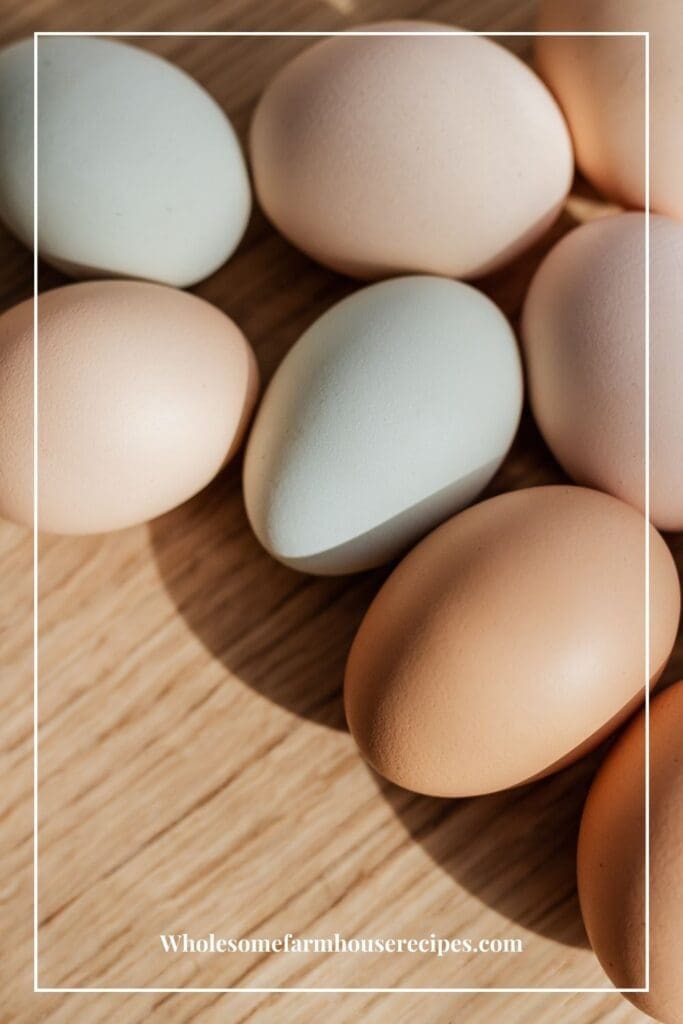
- The color of the eggshells will vary depending on the breed of chicken.
- The backyard chicken’s eggshells can be thicker depending on what they are fed.
- The fresh eggs are not processed like the commercial eggs.
- Therefore, the commercial brand should be stored differently than the farm fresh.
Storing Fresh Eggs from the Grocery Store
The eggs you purchase in your grocery store have been washed, dated, and stored in containers. These must be refrigerated. They are already in a safe container and should be placed in the refrigerator for storage right away. Make sure to pay attention to the freshness dates on the carton.
How Long Do Fresh Eggs Last?
Here’s a quick guide to egg shelf life under common storage conditions:
| Storage Method | Freshness Window | Notes |
| Room temperature (unwashed farm eggs) | ~1–3 weeks | Cooler room, slower deterioration |
| Refrigerator (washed or unwashed) | ~3–5 weeks | Best practice for safety |
| Refrigerator (with mineral oil coating) | ~3–4 months | Traditional method for extended life |
| Freezer (out of shell) | ~12 months | Eggs only, not in shell |
Tip: Even unwashed eggs can lose quality if they sit at room temperature too long. For most households, refrigeration is simpler and safer.
Best Ways to Store Eggs
In the Refrigerator (Recommended)
- Keep eggs in the original carton — it protects them from odors and temperature swings.
- Place on a middle or back shelf, where the temperature is most stable.
- Avoid the fridge door — it experiences frequent temperature changes.
Why this works: Constant cold slows bacterial growth and extends freshness. Refrigeration also helps eggs last well past their “sell by” or “best by” dates.
Room-Temperature Storage (Farm Fresh Eggs Only)
Unwashed farm eggs can safely be stored at room temp for a short time — typically about a week — especially in cooler homes. But humidity and heat speed up quality loss.
Best practice: Store in a cool, shaded area away from direct sunlight.
Traditional & Long-Term Storage (Optional Homestead Techniques)
For farm-fresh eggs with their bloom intact, traditional methods used before refrigeration can extend shelf life:
- Mineral oil coating: Rub food-safe mineral oil on each shell before refrigerating to help seal pores and slow moisture loss.
- Root cellar / cool cellar: Stable cool temps (about 50–55°F) help eggs last weeks to months.
- Water glassing (lime water): A classic preservation method where eggs submerged in limewater can last many months at cool temps.
(Note: These methods require extra care and monitoring for food safety.)
Egg Handling Tips
- Don’t wash eggs before storage (for farm eggs). Washing removes the natural protective bloom.
- If eggs are dirty, dry brush gently to remove debris.
- Store pointy end down — this helps keep the yolk centered and slows air-cell growth.
- Keep eggs away from strong food odors, as shells are porous and can absorb smells.
Can I store farm-fresh eggs at room temperature?
Yes, you can. Backyard chicken eggs or eggs purchased at a local farmer’s market that are unwashed can be stored safely at room temperature form several days to a few weeks. However, when stored at room temperature they will degrade faster than those stored in the refrigerator. The hotter your house is, the faster this will happen. Therefore, for the freshest eggs, I recommend storing unwashed fresh eggs at room temperature for approximately one week and only a day or two if your house if very hot and humid.
Additionally, once washed, they must be stored in the refrigerator. Even those from your own flock of birds or the ones you purchase at the local farmers market stand.
Therefore, if you purchase your eggs from a local farmer, make sure to find out if the eggs have been washed first. It makes a difference!
There are affiliate links on this page and we earn commissions if you shop through the links on this page.Best Practice. When in doubt, store clean eggs in the fridge. When refrigerating unwashed eggs, they will last up to 2 to 3 months. Extend the shelf life by making sure to remove them from the original carton and store them in airtight containers or an egg carton storage box so they don’t get jostled around and crack or absorb the refrigerator odors.
Mother Nature is a wonderful thing. Did you know that eggs come with a protective layer that is a natural coating, and it keeps bacteria from getting inside? It is called a protective bloom or cuticle. This is why they can be stored without refrigeration if you do not wash them. Once this protective barrier is washed off, like commercial growers, they must be refrigerated.
Counter Storage Options
The best way to store them on the kitchen counter is in a container. Here are a few great options to consider.
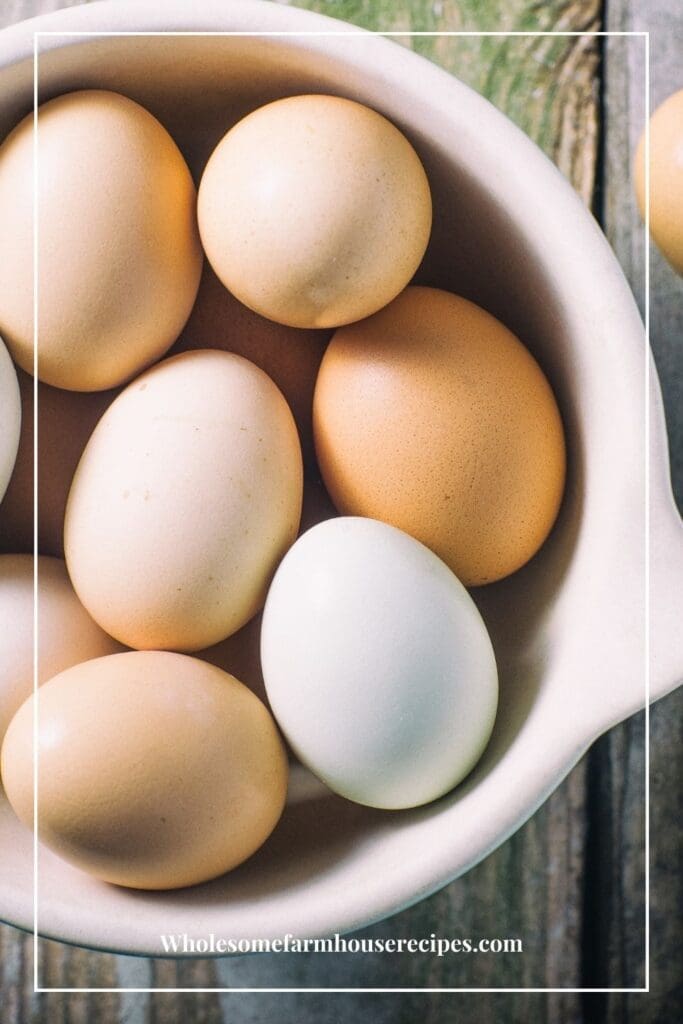
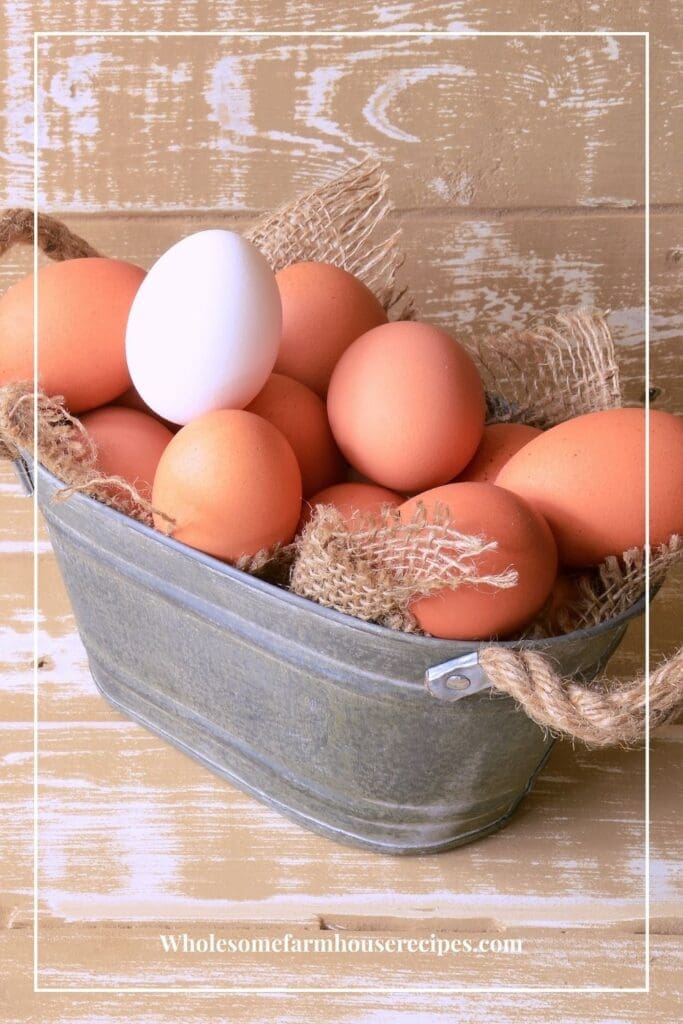
- A bowl or basket to keep them from rolling around or being bumped into and cracking.
- Another great way is an egg skelter. What are they? If you are new to chicken farming, they are a wonderful gadget for your kitchen if you plan on storing your fresh eggs on the counter. They are a spiral fresh egg storage holder with the new ones being placed on the top and the oldest eggs at the bottom with easy access to both ends. As you remove one, the eggs slide down and there is room for one more at the top.
- A ceramic egg plate is pretty and keep them from cracking into each other.
How to Tell If Eggs Are Still Good
Even with good storage, old eggs eventually go bad. Here’s how to test:
Shine a Light — The Float Test
- Sinks flat: Fresh
- Stands upright: Older but still usable
- Floats: Too old; toss it
As an egg ages, the air pocket inside grows, making it more buoyant.
Crack & Sniff
Discolored whites or yolks — don’t use.
A Simple Way to Tell if You’re a Bad Egg from a Good One
Off or sulfur smell — discard immediately.
If you let your chickens roam freely in your backyard, rather than use nesting boxes, sometimes you find eggs laid all over, then you need to figure out if it is freshly laid or old. Additionally, sometimes you might want to test one you purchased from a store or a farm stand.
First, use your sense of smell. If you smell something unpleasant and rotten, it is a good sign that it should be discarded.
Second, take a look. If you are using eggs and you are unsure of their expiration date or freshness, crack it in a bowl before using it in any recipe. You will be able to see and smell if it is fresh. Look for bacterial growth by checking for discoloration in the yolk or whites such as pink, blue, green, or black. Additionally, check the outer egg shells for any cracks, or powdery areas.
The egg float test is an easy way to check the freshness.
It is easy to perform this test. Place the egg in question in a large pan, glass, or bowl of cold water. If you are testing just one a glass of water will do.
Watch what the egg does. As a general rule, if the egg sinks, tilts on its side, and rests on the bottom, it is fresh.
If it the pointy end tilts upwards or floats, it is old and it is time to discard it.
Why does this work? When an egg ages, the tiny air pocket inside will continue to grow as the water is expelled and the air pocket inside becomes larger.
Special Cases
Hard-Boiled Eggs
- In shell: ~7 days in the fridge
- Peeled: ~3–4 days in a covered container
Freezing Eggs
Eggs can be frozen if removed from the shell. Beat whole eggs lightly and pour into freezer-safe trays or containers; yolks and whites can also be frozen separately. Storage life is about 12 months.
Do eggs need to be refrigerated?
Yes — in the U.S., commercial eggs must be refrigerated due to washing; farm eggs benefit from refrigeration too.
How long can eggs sit out?
Store-bought eggs should not be left out more than ~2 hours at room temp for safety.
Does washing shorten egg life?
Yes — washing removes the bloom and exposes the egg to bacteria unless it’s used soon and refrigerated.
Final Thoughts
Fresh eggs are delicious, nutritious, and versatile — and they’ll stay that way longer when you store and handle them thoughtfully. Whether you’re managing backyard layers or shopping a farmers market, understanding storage basics helps you reduce waste and enjoy every egg to the fullest.

A Simple Way to Tell a Bad Egg from a Good One
Kitchen Essentials
As an Amazon Associate I earn from qualifying purchases.
Materials
- Farm Fresh Eggs
- Uncooked Eggs
Instructions
- First, use your sense of smell. If you smell something unpleasant and rotten, it is a good sign that it should be discarded.Farm Fresh Eggs, Uncooked Eggs
- Second, take a look. If you are using eggs and you are unsure of their expiration date or freshness, crack it in a bowl before using it in any recipe. You will be able to see and smell if it is fresh. Look for bacterial growth by checking for discoloration in the yolk or whites such as pink, blue, green, or black. Additionally, check the outer egg shells for any cracks, or powdery areas.
- The egg float test is an easy way to check the freshness.
- It is easy to perform this test. Place the egg in question in a large pan, glass, or bowl of cold water. If you are testing just one a glass of water will do.
- Watch what the egg does. As a general rule, if the egg sinks, tilts on its side, and rests on the bottom, it is fresh.
- If it the pointy end tilts upwards or floats, it is old and it is time to discard it.
Notes
How to Tell If Eggs Are Still Good
Even with good storage, old eggs eventually go bad. Here’s how to test: Shine a Light — The Float Test- Sinks flat: Fresh
- Stands upright: Older but still usable
- Floats: Too old; toss it
As an egg ages, the air pocket inside grows, making it more buoyant.
How Long Do Fresh Eggs Last?
Here’s a quick guide to egg shelf life under common storage conditions:| Storage Method | Freshness Window | Notes |
| Room temperature (unwashed farm eggs) | ~1–3 weeks | Cooler room, slower deterioration |
| Refrigerator (washed or unwashed) | ~3–5 weeks | Best practice for safety |
| Refrigerator (with mineral oil coating) | ~3–4 months | Traditional method for extended life |
| Freezer (out of shell) | ~12 months | Eggs only, not in shell |
Want more kitchen tips? Check out our other food-storage guides and homestead tricks here on Wholesome Farmhouse Recipes!


