
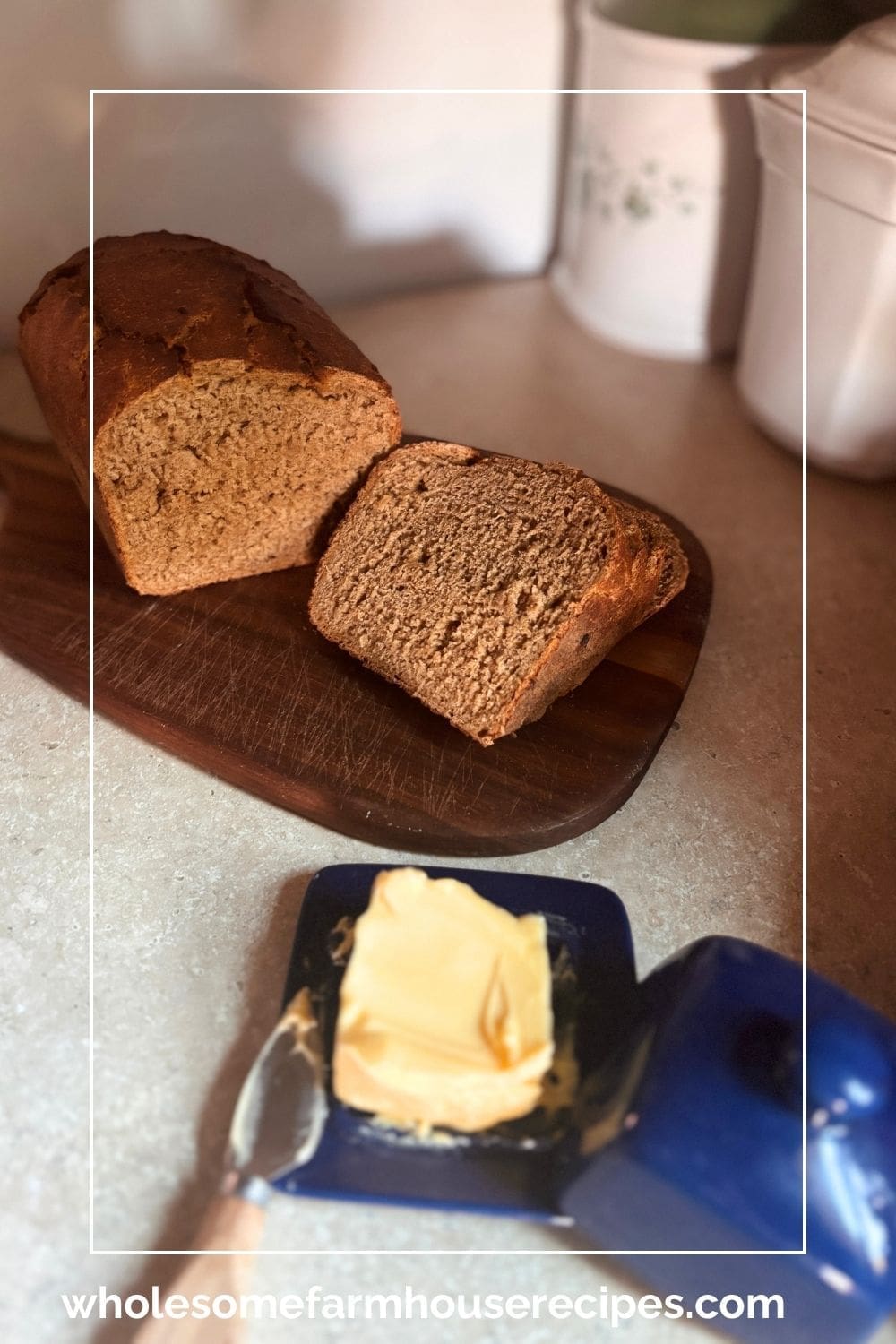
Pumpernickel bread stands out for its deep brown color, hearty rye flavor, and slightly sweet finish. This homemade sourdough version adds molasses, onion, and espresso powder to create a flavorful loaf that’s delicious sliced for sandwiches or toasted and served with butter.
The secret to this recipe is starting the dough the night before. An overnight sourdough sponge combines active starter, rye flour, water, and onion. The following morning, you’ll add the remaining ingredients, shape the loaf, and let it rise before baking. Instant espresso powder helps give the bread its dark appearance without requiring specialty ingredients or a complicated baking process.
I also like that this recipe offers a little flexibility. You can use fresh or dried onion, and brewed black coffee can replace the espresso mixture.
The result is a substantial loaf with a browned crust and a flavorful interior that pairs well with everything from homemade soup to a roast beef sandwich.

What Makes This Pumpernickel Bread Different?
Traditional pumpernickel breads vary considerably in how they’re prepared. Some use long, slow baking methods, while others rely on rye flour, molasses, and other ingredients to develop their characteristic color and flavor.
This sourdough version takes a more straightforward approach.
- Sourdough starter develops flavor. The starter ferments the rye flour overnight before the remaining flour and ingredients are incorporated.
- Rye flour adds an earthy taste. Whole-grain rye gives the bread its hearty character.
- Espresso powder deepens the color. Dissolving instant espresso powder in the water helps create a darker loaf while contributing a subtle roasted flavor.
- Molasses balances the savory ingredients. Its sweetness complements the rye, sourdough, and onion.
- Onion adds another layer of flavor. It makes this loaf especially good for savory sandwiches.
This isn’t a traditional, all-rye pumpernickel loaf. The combination of rye and all-purpose flour produces a bread that’s more practical for everyday sandwich making. You don’t need a long list of specialty ingredients to make this bread. The combination of a few flavorful additions transforms a basic sourdough dough into something distinctive.

Homemade Sourdough Pumpernickel Bread Recipe
As an Amazon Associate I earn from qualifying purchases.
Kitchen Essentials


Ingredients
Ingredients for the Overnight Sponge
- 294 Grams Active Starter risen 1 1/3 cups
- 2 Teaspoons Espresso Powder such as Nescafe
- 227 Grams Water room-temperature
- 213 Grams Whole-Grain Rye Flour 2 cups or pumpernickel flour
- 2 Tablespoons Dried Minced Onion or 1/2 cup fresh chopped onion
Ingredients to Finish the Bread Dough
- 25 Grams Avocado Oil 2 tablespoons
- 2 Teaspoons Salt
- 85 Grams Molasses 1/4 cup
- 480 Grams All-Purpose Flour 4 cups preferably unbleached
Instructions
How to Make Sourdough Pumpernickel Bread
- This bread is made over two days, but the hands-on work is relatively simple. The overnight sponge gets started the evening before, leaving you to finish the dough and bake the loaf the following day.
Prepare the Sourdough Sponge
- In a large mixing bowl, dissolve the espresso powder in the room-temperature water.2 Teaspoons Espresso Powder, 227 Grams Water
- Stir in the active sourdough starter, rye flour, and your choice of fresh chopped onion or dried minced onion. Mix until the ingredients are evenly combined.294 Grams Active Starter, 213 Grams Whole-Grain Rye Flour, 2 Tablespoons Dried Minced Onion
- Cover the bowl tightly with plastic wrap and leave it at room temperature overnight, for up to 12 hours.
- During this time, the sourdough starter begins fermenting the rye flour and developing flavor. The exact appearance and activity of the sponge will depend on the strength of your starter and the temperature of your kitchen.
Add the Remaining Ingredients
- The following morning, uncover the sponge and stir in the avocado oil, salt, and molasses.25 Grams Avocado Oil, 2 Teaspoons Salt, 85 Grams Molasses
- Gradually add the all-purpose flour, about one cup at a time, mixing as you go. Continue until a stiff dough forms and the flour is incorporated.480 Grams All-Purpose Flour
- The dough should hold together well enough to knead and shape. Depending on your starter and flour, you may need to adjust the consistency slightly.
Knead, Shape, and Rise the Loaf
- Turn the dough onto a lightly floured work surface.
- Knead for 1 to 2 minutes, just until the dough forms a cohesive ball and no dry flour remains. Rye dough can feel tacky, so avoid adding too much extra flour. If it sticks to your hands, lightly oiling them can make handling easier.
- Shape the dough into a log that fits your cast iron bread pan.
- Grease the cast iron bread pan and place the shaped dough inside. Start with a cold, unheated pan.
- Cover the pan and let the dough rise for approximately 2 to 4 hours, or until it reaches the top edge of the pan.
- Keep in mind that sourdough bread doesn’t always follow an exact schedule. A cool kitchen or a less active starter may extend the rising time.
Baking and Cooling the Bread
- Preheat your oven to 425°F.
- Place the covered cast iron bread pan in the preheated oven and bake for 30 minutes. Keeping the pan covered during the initial baking period helps retain moisture.
- Carefully remove the cover and continue baking for another 15 to 20 minutes, until the crust is deeply browned and set.
- Watch the loaf toward the end of the baking time, as cast iron pans and ovens can vary in how quickly they brown bread.
- Remove the bread from the pan and transfer it to a wire rack.
- Allow the loaf to cool completely before slicing. Cutting into bread while it’s still hot can compress the interior and leave the crumb gummy.
- Once cooled, the loaf is ready to slice for sandwiches, toast, or serving alongside your favorite homemade meals.
Your Own Private Notes
Notes
Tips for Better Pumpernickel Bread
How to Know if the Bread is Done? Make sure the loaf is finished baking by looking for a rich, golden‑brown crust and an internal temperature of 200–205°F in the center. Start with an active starter. A healthy, active sourdough starter helps ferment the sponge and raise the finished loaf. If your starter is sluggish, the dough may take longer to rise. Measure the flour carefully. Weighing the flour provides more consistent results than measuring by volume. If using measuring cups, spoon the flour into the cups and level the tops rather than packing it down. Don’t overwork the dough. This recipe requires only a short kneading period. Work the dough until it comes together rather than trying to develop it as you might with a traditional white sandwich loaf. Give the dough enough time to rise. The 2-to-4-hour estimate is a guideline. Look for the dough to reach the top edge of the pan before baking. Let the loaf cool completely. This is particularly important with a dense, hearty bread. Cooling allows the interior to set so the slices hold together better.Nutrition
Ingredient Substitutions
You can adjust a couple of ingredients without changing the overall character of the loaf.
Caraway Seed Pumpernickel
Add 1–2 teaspoons of caraway seeds to the dough for a traditional rye-bread flavor. This is probably my favorite variation because caraway pairs naturally with rye.
Rye Bread with Dried Cranberries
Add about ⅓ cup of dried cranberries for a sweet-tart contrast to the molasses and earthy rye. This makes a less traditional loaf but could be nice for a holiday bread basket.
Cheddar Pumpernickel Bread
Fold in ½ cup of shredded sharp cheddar cheese when mixing the dough. The cheese adds a savory flavor that works well with the onion and molasses. Pat the cheese dry if it is particularly moist, and avoid adding too much extra flour.
Roasted Garlic Pumpernickel
Replace the fresh onion with 2–3 tablespoons of mashed roasted garlic. This gives the loaf a mellow, savory flavor. Since roasted garlic contains moisture, check the dough consistency as you mix.
Crispy Onion Rye Bread
Stir ¼ cup of commercially prepared crispy fried onions into the dough for extra onion flavor and a little texture. These are different from dried minced onions, so start with a modest amount and check the dough consistency.
Cherry Rye Bread
Add ⅓ cup of chopped dried cherries for a sweet-tart variation. This is a nice option for serving with cheese or alongside a holiday meal. Dried cherries are usually less moist than fresh fruit, making them easier to incorporate into the dough.

What to Serve with Pumpernickel Bread
The combination of rye, molasses, and onion makes this loaf especially well suited to savory foods.
Here are a few ways to enjoy it:
- Roast beef sandwiches: Layer thinly sliced roast beef on the bread with mustard or your favorite sandwich toppings.
- Grilled cheese: Pair the hearty bread with Swiss or cheddar cheese for a flavorful toasted sandwich.
- Homemade soup: Serve slices alongside vegetable soup, beef stew, or a creamy potato soup.
- Breakfast toast: Toast a slice and spread it with butter or cream cheese.
- Open-faced sandwiches: Top slices with ham, cheese, or leftover roasted meat for a simple lunch.
Because the bread has a substantial texture and pronounced flavor, it works particularly well with fillings that can stand up to the rye and onion.
How to Store Homemade Pumpernickel Bread
Allow the bread to cool completely before storing it.
Room temperature: Keep the loaf in a bread bag or airtight container for about 3 to 4 days. Store it in a cool, dry place away from direct sunlight.
Freezing: For longer storage, slice the cooled loaf and place the slices in a freezer-safe bag. Separate them with small pieces of parchment paper if you want to remove individual slices easily. You can also freeze the entire loaf.
Thaw slices at room temperature or place them directly in the toaster for a quick breakfast or sandwich.
Refrigeration isn’t necessary for short-term storage and can cause bread to lose its freshness more quickly.
Is pumpernickel bread made with rye flour?
Yes. Rye flour is a defining ingredient in pumpernickel bread. This recipe combines whole-grain rye flour with all-purpose flour for a hearty loaf that’s easier to shape and slice than a bread made entirely with rye.
Why is my pumpernickel bread so dark?
The dark color in this recipe comes from a combination of rye flour, molasses, and espresso powder. Together, these ingredients produce a deep brown loaf without requiring artificial coloring.
Does pumpernickel bread taste like coffee?
The espresso powder contributes a subtle roasted flavor and dark color. It shouldn’t overpower the other ingredients or make the bread taste like a coffee-flavored dessert.
Why is my sourdough bread dense?
Several factors can affect the texture, including starter activity, fermentation time, flour measurements, and whether the bread has baked through. Make sure your starter is active, allow the shaped loaf to rise sufficiently, and let the bread cool completely before slicing.

Homemade Bread for Everyday Meals
This homemade sourdough pumpernickel bread brings together simple ingredients for a loaf with a distinctive color and savory-sweet flavor. The overnight sponge gives the sourdough time to develop flavor, while the straightforward shaping and baking process makes this a useful recipe to keep in your bread-making collection.
Slice it for sandwiches, toast it for breakfast, or serve it with a pot of homemade soup. Once you have a loaf ready to use, you’ll have plenty of ways to work it into everyday meals.
Stay connected with Wholesome Farmhouse Recipes
Add Wholesome Farmhouse Recipes as a preferred source in Google Search to make it easier to find our recipes and cooking ideas when you're searching for something delicious to make.


My family loved this!