
These homemade English muffins are soft and airy inside, lightly crisp around the edges, and filled with all those little nooks and crannies that are perfect for catching melted butter, honey, and jam.
And there is no need to heat up the oven. These English muffins are cooked right on the stovetop in a skillet, making them a surprisingly simple homemade bread recipe.
I especially love recipes like this because they can be made ahead. Prepare the dough the night before, let it rest in the refrigerator, and finish shaping and cooking the muffins the next morning. They are wonderful for a leisurely weekend breakfast, brunch, or breakfast sandwiches.
Once you taste a warm homemade English muffin, you may find yourself looking at the ones from the grocery store a little differently.

Why You’ll Love This English Muffin Recipe
They are made from simple ingredients. You probably already have most of what you need in your kitchen.
No oven is needed. The muffins cook completely in a skillet on the stovetop.
The texture is wonderful. They have a lightly crisp outside with a soft, airy interior.
They are make-ahead friendly. The dough can be refrigerated overnight.
They freeze well. Make a large batch and save some for quick breakfasts during the week.
They are delicious toasted. Once split and toasted, the little pockets inside become perfect places for butter and other toppings to melt into.
What Gives English Muffins Their Nooks and Crannies?
That wonderfully uneven interior is one of the best parts of an English muffin.
The dough for these muffins is softer and wetter than a typical loaf of bread dough. While it may seem tempting to add extra flour because the dough feels sticky, try to resist. That moisture helps create the light, airy texture inside.
The muffins are also cooked gently in a skillet rather than baked in the oven. This allows the outside to develop a golden crust while the center cooks slowly.
For the most traditional texture, split the muffins open with a fork rather than cutting straight through with a knife. The rougher surface gives melted butter, honey, and jam plenty of little places to settle.

Homemade English Muffins Recipe with Nooks and Crannies
As an Amazon Associate I earn from qualifying purchases.
Kitchen Essentials


Ingredients
- ¾ Cup Whole Milk (180ml)
- ½ Cup Water (120ml)
- 2 Tablespoons Granulated Sugar
- 1 Packet Active Dry Yeast (7 grams)
- 3 Cups All-Purpose Flour (360 grams)
- 1 Teaspoon Salt
- 3 Tablespoons Unsalted Butter (42 grams) melted and cooled slightly
- 1 Large Egg room temperature
- Cornmeal or rice flour, as needed for dusting
Instructions
How to Make Homemade English Muffins
- Activate the Yeast. Add the milk, water, and sugar to a microwave-safe bowl or glass measuring cup. Warm to about 110°F. Stir in the yeast and let the mixture sit for 5 to 7 minutes. It should become foamy on top.¾ Cup Whole Milk, ½ Cup Water, 2 Tablespoons Granulated Sugar, 1 Packet Active Dry Yeast
- If your yeast doesn’t foam, it’s worth stopping here and checking the yeast before continuing. Active yeast is important for getting light, airy muffins.
- Mix the Dough. While the yeast is activating, whisk together the flour and salt in a bowl.3 Cups All-Purpose Flour, 1 Teaspoon Salt
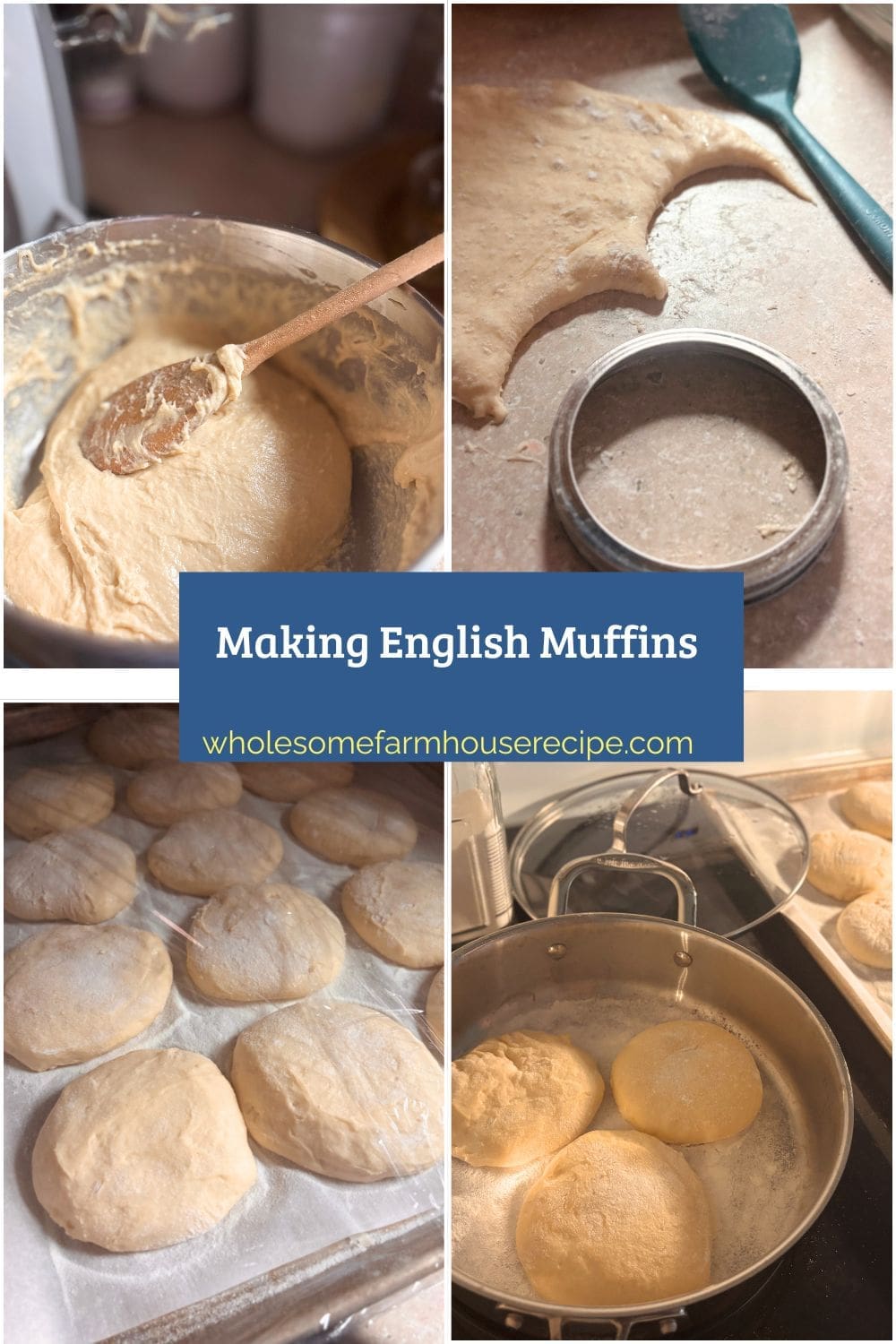
- Whisk the egg and melted, slightly cooled butter into the yeast mixture. Once everything is combined, continue to mix for about 7 to 10 minutes.1 Large Egg, 3 Tablespoons Unsalted Butter
- You can also use a stand mixer on low speed, slowly add the liquid to the flour. Once everything is combined, increase the speed to medium-high and mix for about 7 to 10 minutes.
- The dough should become smooth and elastic and begin pulling away from the sides of the bowl.
- Don’t worry if it is sticky. This is one of those recipes where sticky dough is a good thing. Avoid adding a lot of extra flour.
- Let the Dough Rise. Place the dough in a large, lightly oiled bowl and cover it tightly. Let it rise in a warm spot for about 1 hour, or until it has doubled in size.
- For an overnight breakfast option, cover the dough and refrigerate it after the first rise. Let it sit at room temperature for about an hour the next morning before shaping.
- Shape the Muffins. Line one or two large baking sheets with parchment paper and sprinkle generously with cornmeal.
- Transfer the dough to a lightly floured countertop. Sprinkle a little flour over the top and gently pat the dough until it is just under 1 inch thick.
- Use a 2½-inch round cutter to cut the muffins. Don’t have a biscuit cutter? A wide-mouth mason jar lid makes a handy substitute.
- Carefully move each round to the prepared baking sheet. The dough is soft, so using a spatula can make transferring the muffins easier.
- Gently press the scraps together, pat them out again, and continue cutting until all the dough has been used.
- Give the Muffins a Second Rise. Loosely cover the baking sheets with plastic wrap.
- Let the shaped muffins rest in a warm spot for about 30 minutes. They should look noticeably puffed before cooking.
- This second rise is worth the extra time because it helps create the light texture we’re looking for.
- Cook the English Muffins in a Skillet
- Heat a large skillet over medium-low heat. Sprinkle a little cornmeal into the skillet and add 3 to 4 muffins, leaving enough space between them.Cornmeal
- Cover the skillet with a lid and reduce the heat a little more. Cook for about 6 to 8 minutes. The bottoms should be golden brown and the tops should look dry.
- Carefully flip the muffins and continue cooking uncovered for another 6 to 8 minutes, until the other side is golden and the muffins are cooked through.
- Transfer to a plate or cooling rack and continue with the remaining muffins.
Your Own Private Notes
Notes
Cook one muffin first.
It might seem like an unnecessary step, but it can save an entire batch. Every stove and skillet behaves a little differently. Plus, skillets continue to heat as you cook, so the temperature that works beautifully for the first batch may be too hot for the second or third. If your muffins are becoming dark on the outside before the centers are cooked, lower the heat. The goal is a golden exterior and a fully cooked, soft center.Adjust the Heat Between Batches
This is especially important if you’re using a cast iron skillet. Cast iron retains heat extremely well. You may find that you need to turn the burner down as you move through the batches. Also, keep an eye on the cornmeal in the skillet. If it begins to burn, carefully wipe it out before starting another batch and add fresh cornmeal. A little attention to the skillet temperature makes a big difference.Tips for Making the Best English Muffins
- Make sure the milk mixture isn’t too hot when adding the yeast.
- Give the yeast enough time to become foamy.
- Don’t add excessive flour to the sticky dough.
- Let the dough fully double during the first rise.
- Don’t skip the second rise after shaping.
- Cook one muffin first to test the skillet temperature.
- Keep the heat lower than you might expect.
- Remember that the skillet gets hotter as you cook.
- Leave space between the muffins while cooking.
- Remove burnt cornmeal between batches.
- Let the muffins cool slightly before splitting and serving.
Nutrition
Can I Make the Dough the Night Before?
Yes!
This is one of my favorite things about this recipe.
After the first rise, cover the dough and place it in the refrigerator overnight. The next morning, allow it to sit at room temperature for about an hour before shaping.
Once shaped, let the muffins rise for about 30 minutes before cooking.
This makes homemade English muffins much more practical for a weekend breakfast. Most of the work is already done before you even get out the skillet.
How to Store Homemade English Muffins
Allow the muffins to cool completely before storing them.
Keep them in an airtight container or zip-top bag at room temperature for several days.
For the best texture, split and toast them just before serving.
Can You Freeze English Muffins?
Absolutely. Homemade English muffins freeze very well.
For convenience, split them in half before freezing. Place the halves in a freezer-safe bag or container, separating them with parchment paper if needed.
When you’re ready for breakfast, they can go straight from the freezer into the toaster.
Having homemade English muffins tucked away in the freezer makes busy mornings much easier.
What to Put on Homemade English Muffins
There are so many ways to serve them.
For a simple breakfast, nothing beats a warm toasted English muffin with butter.
You can also try:
- Butter and honey
- Homemade strawberry or blueberry jam
- Apple butter
- Peanut butter
- Cream cheese and berries
- Cinnamon and butter
- Fried or scrambled eggs
- Sausage, egg, and cheese
- Ham and cheese
- Bacon, egg, and cheese
They are also delicious alongside a bowl of soup or as the base for a quick homemade pizza.

Why is my English muffin dough sticky?
English muffin dough is supposed to be softer and stickier than traditional bread dough. Try not to compensate by adding lots of flour. The moisture helps create the airy interior and nooks and crannies.
Why did my English muffins burn on the outside?
The skillet was likely too hot. English muffins need enough time to cook through without the exterior browning too quickly.
Lower the heat, especially as you move through additional batches.
Why are my English muffins doughy inside?
This can also be caused by excessive skillet heat. If the outside cooks too quickly, the center doesn’t have enough time to finish.
Try lowering the heat and cooking the muffins a little longer.
Can I use rice flour instead of cornmeal?
Yes. Rice flour works well for dusting the muffins and skillet. Cornmeal is simply my preference for its traditional texture.
Can I use whole wheat flour?
You can replace part of the all-purpose flour with whole wheat flour. I recommend starting with about ½ cup whole wheat flour and using all-purpose flour for the remaining amount.
Using too much whole wheat flour can make the muffins heavier.
Do I need a stand mixer?
A stand mixer makes the process easy, but you don’t necessarily need one. The important part is developing a smooth, elastic dough. If mixing by hand, use a sturdy spoon at first and then knead the dough gently as needed.

Warm English Muffins for Breakfast
Homemade English muffins are one of those recipes that may seem like something best left to the bakery. But once you make them yourself, you’ll realize they’re quite approachable.
There is something especially satisfying about watching those little rounds of dough puff up on the baking sheet and then slowly turn golden in the skillet.
And the reward is worth it.
Split one open while it’s still warm, add a little butter, and watch it melt into all those wonderful nooks and crannies. Add some homemade jam or honey, pour yourself a cup of coffee, and you’ve got a breakfast that feels like a treat.
Best of all, you can make a big batch, freeze the extras, and enjoy that same homemade goodness long after the skillet has been put away.


A delicious recipe to make ahead for easy grab and go breakfast options.